
Sprains and Strains in the Construction Industry
January 17, 2026 2026-01-17 9:43Sprains and Strains in the Construction Industry
Sprains and Strains in the Construction Industry
Sprains and Strains in the Construction Industry
Gone are the days of competing to lift the heaviest load or push through pain to prove strength. Companies that allow such behavior are risking not only the well-being of their workers but also skyrocketing insurance and accident costs. To avoid this, proper planning and smarter work practices are essential.
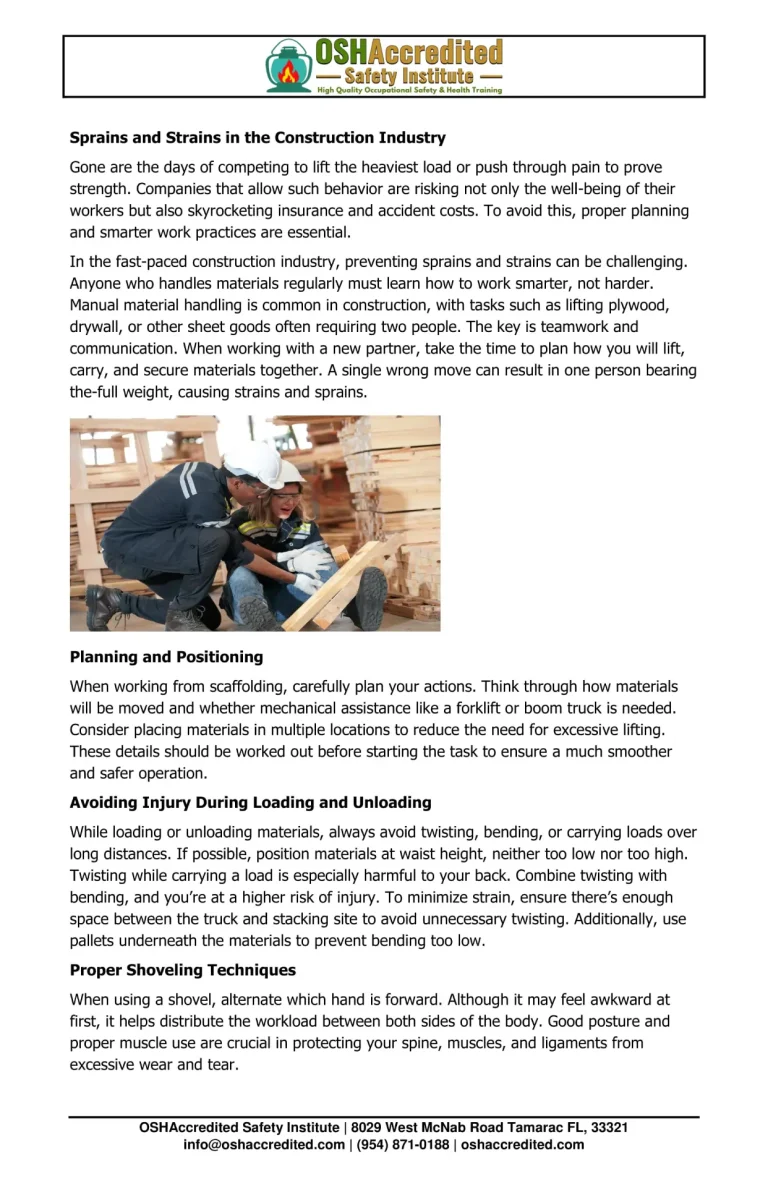
In the fast-paced construction industry, preventing sprains and strains can be challenging. Anyone who handles materials regularly must learn how to work smarter, not harder. Manual material handling is common in construction, with tasks such as lifting plywood, drywall, or other sheet goods often requiring two people. The key is teamwork and communication. When working with a new partner, take the time to plan how you will lift, carry, and secure materials together. A single wrong move can result in one person bearing the-full weight, causing strains and sprains.
Planning and Positioning
When working from scaffolding, carefully plan your actions. Think through how materials will be moved and whether mechanical assistance like a forklift or boom truck is needed. Consider placing materials in multiple locations to reduce the need for excessive lifting. These details should be worked out before starting the task to ensure a much smoother and safer operation.
Avoiding Injury During Loading and Unloading
While loading or unloading materials, always avoid twisting, bending, or carrying loads over long distances. If possible, position materials at waist height, neither too low nor too high. Twisting while carrying a load is especially harmful to your back. Combine twisting with bending, and you’re at a higher risk of injury. To minimize strain, ensure there’s enough space between the truck and stacking site to avoid unnecessary twisting. Additionally, use pallets underneath the materials to prevent bending too low.
Proper Shoveling Techniques
When using a shovel, alternate which hand is forward. Although it may feel awkward at first, it helps distribute the workload between both sides of the body. Good posture and proper muscle use are crucial in protecting your spine, muscles, and ligaments from excessive wear and tear.
Managing Repetitive Motion
Tasks requiring repetitive hand or wrist movements, such as using a screwdriver, can lead to strain. Switching to a battery-operated screwdriver can reduce the constant twisting of the wrist. Similarly, hammering nails all day can strain both elbows and wrists. Using wooden-handle hammers, which transmit less vibration than metal or fiberglass handles, can help. Wearing tennis elbow-support or vibration-dampening gloves can also limit discomfort and prevent long-term injury.
Problem-Solving and Communication
The first step to avoiding injuries is discussing uncomfortable or awkward tasks with your supervisor. Sharing concerns and possible solutions at safety meetings with co-workers can help identify and resolve risks. Staying healthy and injury-free is crucial for both your well-being and the livelihood of your employer and family.
Summary
In construction, preventing sprains and strains starts with planning, teamwork, and smart work practices. By using proper lifting techniques, reducing repetitive motions, and addressing potential hazards, you can significantly reduce the risk of injury. Prioritize communication and safety to ensure a healthy and productive work environment.