
Crane Safety in Construction
January 20, 2026 2026-01-20 4:39Crane Safety in Construction
Crane Safety in Construction
Crane Safety in Construction
Overview
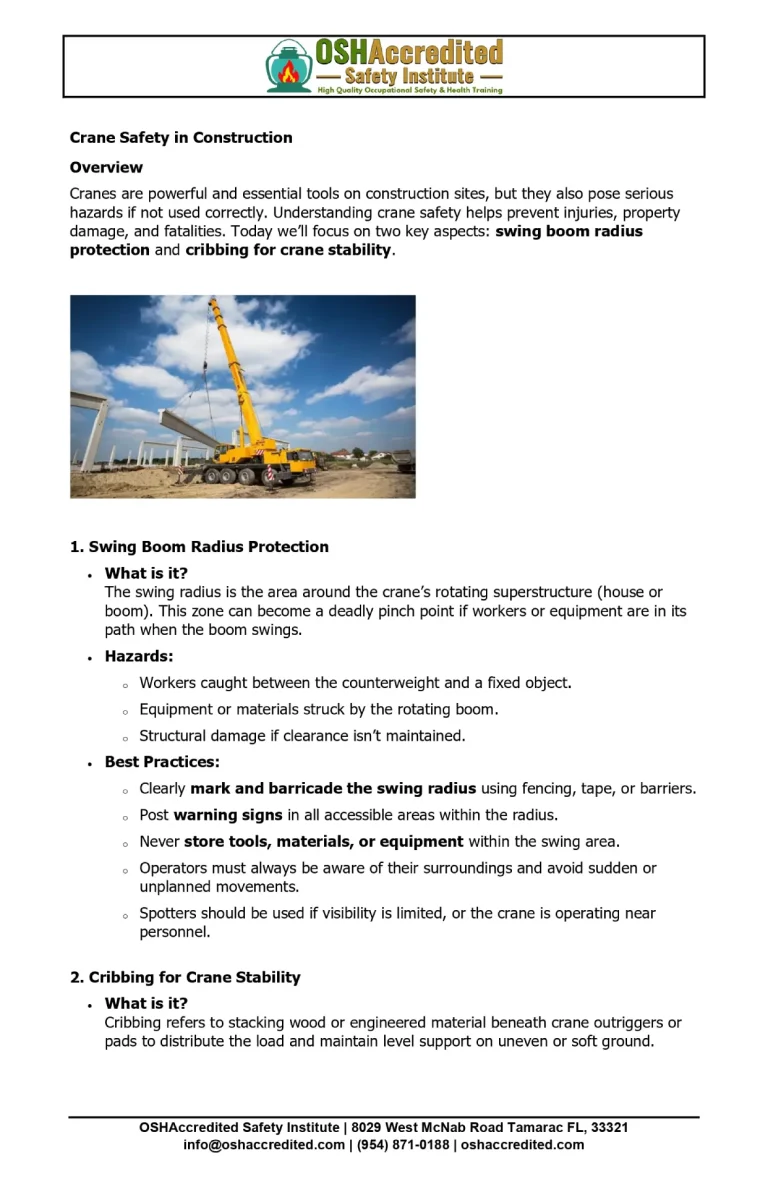
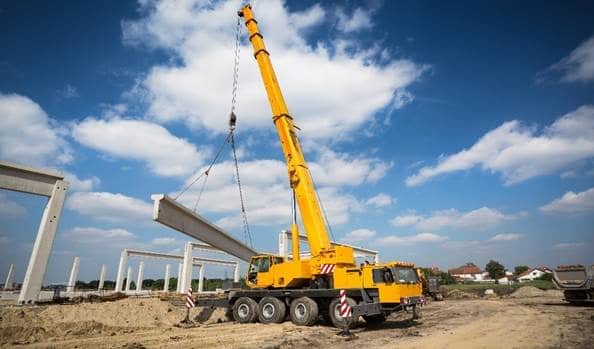
Cranes are powerful and essential tools on construction sites, but they also pose serious hazards if not used correctly. Understanding crane safety helps prevent injuries, property damage, and fatalities. Today we’ll focus on two key aspects: swing boom radius protection and cribbing for crane stability.
- Swing Boom Radius Protection
- What is it?
The swing radius is the area around the crane’s rotating superstructure (house or boom). This zone can become a deadly pinch point if workers or equipment are in its path when the boom swings. - Hazards:
- Workers caught between the counterweight and a fixed object.
- Equipment or materials struck by the rotating boom.
- Structural damage if clearance isn’t maintained.
- Best Practices:
- Clearly mark and barricade the swing radius using fencing, tape, or barriers.
- Post warning signs in all accessible areas within the radius.
- Never store tools, materials, or equipment within the swing area.
- Operators must always be aware of their surroundings and avoid sudden or unplanned movements.
- Spotters should be used if visibility is limited, or the crane is operating near personnel.
- Cribbing for Crane Stability
- What is it?
Cribbing refers to stacking wood or engineered material beneath crane outriggers or pads to distribute the load and maintain level support on uneven or soft ground.
- Hazards:
- Crane tipping due to unstable or soft ground.
- Load shifting or loss of control from uneven footing.
- Damage to underground utilities or structures from excessive ground pressure.
- Best Practices:
- Always use appropriate cribbing based on crane size, ground conditions, and load weight.
- Cribbing must be solid, stable, and level—never use broken, rotted, or unapproved material.
- Use engineered outrigger pads or mats when available.
- Perform a pre-lift inspection to verify cribbing and ground conditions.
- Keep cribbing clear of water, mud, and ice that may cause shifting or sinking.
Final Reminders
- Only qualified operators should run cranes.
- Keep clear communication between the operator and ground crew.
- Always follow the manufacturer’s guidelines and load charts.
- Regularly inspect all crane components and support surfaces.
Summary
Crane operations demand attention to detail and strict adherence to safety protocols. Protect swing boom radius areas to prevent crush injuries, and ensure stable, level cribbing to avoid tipping or loss of control. These precautions save lives and keep the job site running safely and efficiently.
✅ Stay out of the swing zone.
✅ Use solid cribbing and inspect it regularly.
✅ Safety around cranes is everyone’s responsibility.