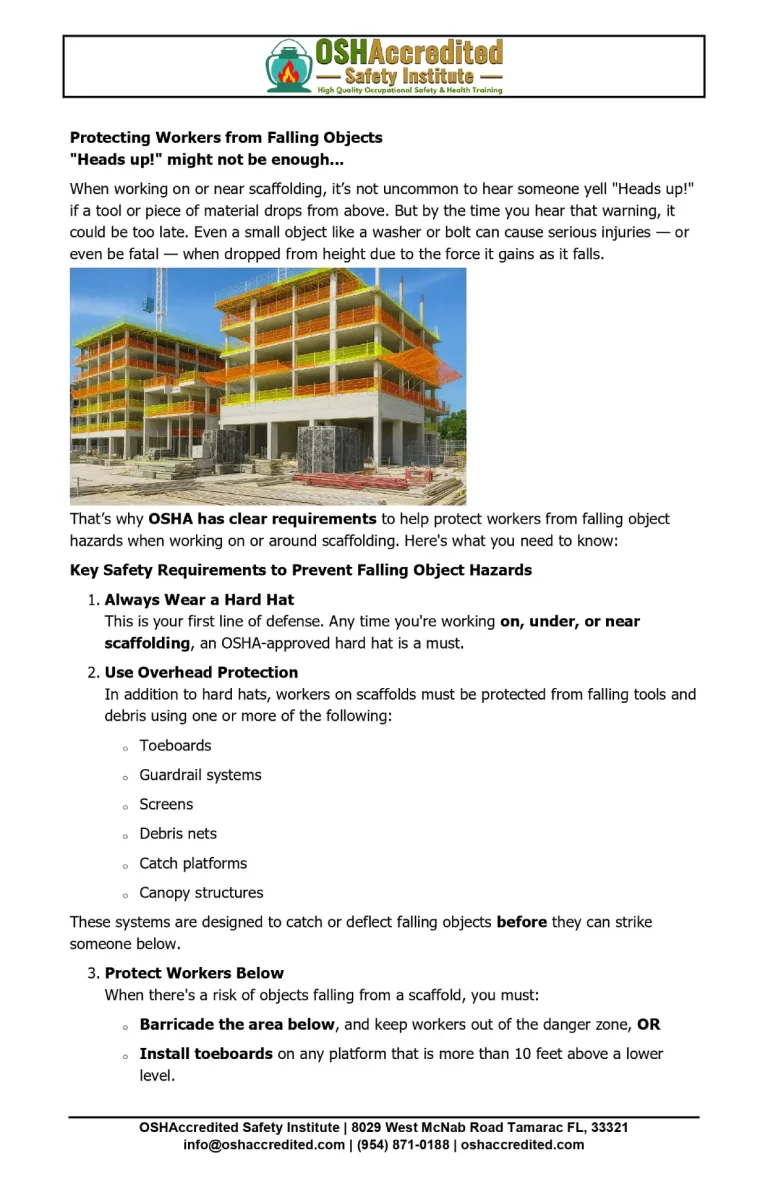

Protecting Workers from Falling Objects
January 21, 2026 2026-01-21 10:02Protecting Workers from Falling Objects
Protecting Workers from Falling Objects
Protecting Workers from Falling Objects
“Heads up!” might not be enough…
When working on or near scaffolding, it’s not uncommon to hear someone yell “Heads up!” if a tool or piece of material drops from above. But by the time you hear that warning, it could be too late. Even a small object like a washer or bolt can cause serious injuries — or even be fatal — when dropped from height due to the force it gains as it falls.

That’s why OSHA has clear requirements to help protect workers from falling object hazards when working on or around scaffolding. Here’s what you need to know:
Key Safety Requirements to Prevent Falling Object Hazards
- Always Wear a Hard Hat
This is your first line of defense. Any time you’re working on, under, or near scaffolding, an OSHA-approved hard hat is a must. - Use Overhead Protection
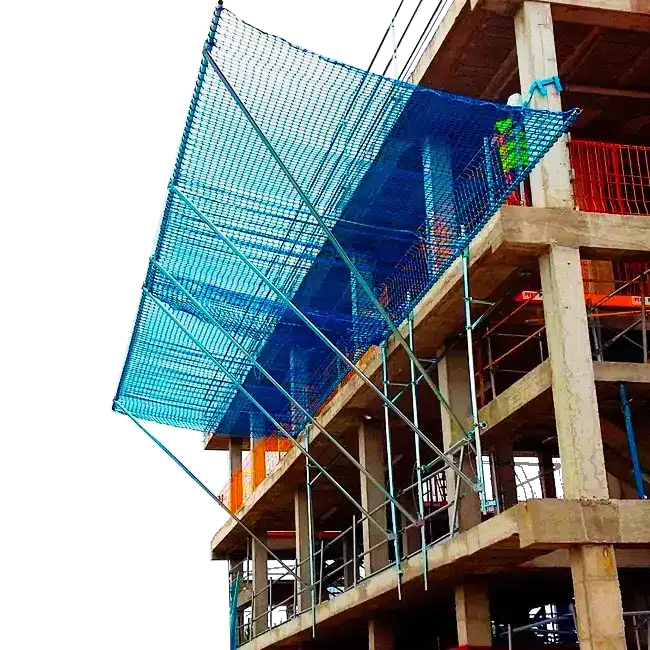
In addition to hard hats, workers on scaffolds must be protected from falling tools and debris using one or more of the following:- Toeboards
- Guardrail systems
- Screens
- Debris nets
- Catch platforms
- Canopy structures
These systems are designed to catch or deflect falling objects before they can strike someone below.
- Protect Workers Below
When there’s a risk of objects falling from a scaffold, you must:- Barricade the area below, and keep workers out of the danger zone, OR
- Install toeboards on any platform that is more than 10 feet above a lower level.
- Extra Protection for Stacked Materials
If materials or tools are stacked above the height of the toeboard, then one of the following must be used:- Panels or screens that extend from the toeboard to the top of the guardrail
- Guardrails with small openings that block falling objects
- A canopy, debris net, or catch platform strong enough to stop falling objects
- Secure Large or Heavy Items
If the object is too big or heavy to be stopped by the above methods:- Store it away from the edge of the platform
- Secure it properly to prevent it from moving or falling
- Use chocks for rolling items
- Use tool lanyards or tethers where appropriate
Important Notes
- A Competent Person is responsible for ensuring all fall protection systems are correctly installed and meet OSHA’s strength and design standards.
- Never remove or bypass protective systems, even temporarily.
- If you’re unsure about safety measures or notice something missing, stop and check with the Competent Person before continuing work.
Final Thoughts
Falling objects may seem like a small risk, but the consequences can be serious — even deadly. Don’t rely on last-minute warnings. Use the right equipment, follow procedures, and always protect yourself and others working below.
Any questions or experiences to share about falling object hazards or protection methods?
Please sign the training form to confirm your attendance for today’s talk.