
Toolbox Talk: The 3-Second Following Distance Rule
March 30, 2026 2026-04-23 4:44Toolbox Talk: The 3-Second Following Distance Rule
The 3-Second Following Distance Rule
Toolbox Talk: The 3-Second Following Distance Rule
Introduction:
Good morning team! Today, we’re going to talk about something that’s crucial to everyone’s safety when driving: the 3-second following distance rule. This simple guideline can prevent a lot of accidents and keep us safer on the road, especially in conditions where visibility and reaction time are critical.
What is the 3-Second Following Distance Rule?
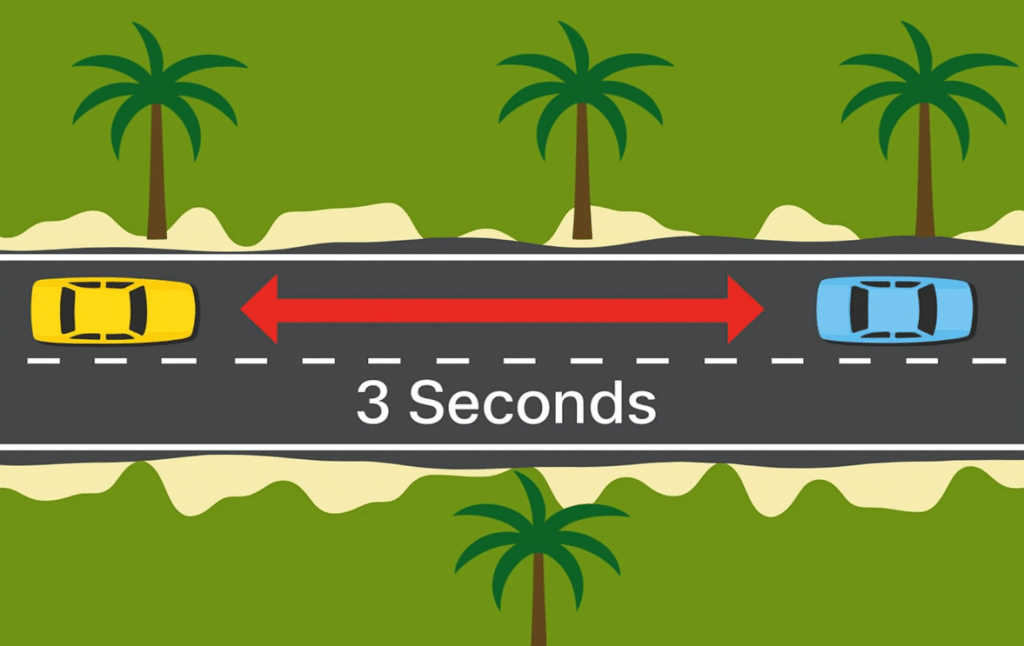
The 3-second rule is exactly what it sounds like: it’s the amount of time you should keep between your vehicle and the one in front of you. By maintaining this distance, you give yourself enough time to react in case the vehicle ahead of you suddenly brakes or makes a quick maneuver.
How to Apply the 3-Second Rule:
- Pick a Fixed Point: As you drive, pick a fixed object like a sign, a tree, or a road marking ahead of the vehicle in front of you.
- Watch the Vehicle in Front of You: As soon as the rear bumper of the car in front of you passes that fixed point, start counting: “One thousand one, one thousand two, one thousand three.”
- Check the Timing: If you reach the same fixed point before you finish counting to three, you’re following too closely. In that case, you need to slow down and increase your following distance.
Why is Following Distance Important?
- Reaction Time: The 3-second rule gives you enough time to react in case of sudden breaking or unexpected events. If you’re too close, you won’t have enough time to stop safely.
- Improved Visibility: Maintaining this distance gives you a clear line of sight. If you’re tailgating, your view of the road can be blocked, especially if the vehicle in front is large, like a truck or a bus.
- Weather Conditions: On rainy, snowy, or foggy days, it’s essential to increase your following distance. Wet or slippery roads mean it takes longer to stop, so you may need to extend your distance to 4 or even 5 seconds.
Key Considerations:
- Traffic Flow: If you’re on a high-speed road (like a freeway), you might find that traffic is moving fast but remember—speed doesn’t mean you can shorten your following distance. You still need to maintain that 3-second gap, and in high-speed environments, a larger gap may be even more important.
- Adjust for Conditions: The 3-second rule is a good baseline, but in conditions like rain, snow, or fog, you need to increase that distance to give yourself more room to stop. Always adjust your following distance based on the conditions you’re driving in.
- Vehicle Size: Larger vehicles (like trucks or construction equipment) need more space to stop, and they may block your view of the road. In these cases, consider increasing your following distance beyond 3 seconds.
- Tailgating: It’s tempting to stay close to the vehicle in front to “keep up” with traffic or avoid getting cut off, but tailgating is dangerous and can lead to accidents, especially if the driver in front has to brake suddenly.
Consequences of Not Following the Rule:
- Rear-End Collisions: If you’re too close to the vehicle ahead of you, there’s a higher chance you’ll rear-end them if they suddenly brake or stop.
- Increased Stopping Distance: The less space you have between you and the vehicle in front of you, the longer it will take for you to stop safely.
- Higher Risk in Bad Weather: If you don’t follow the rule, you’re at an even higher risk during bad weather. Wet, icy, or snowy conditions reduce traction, meaning it takes more time and distance to stop.
Conclusion:
Maintaining a 3-second following distance can save lives. It’s simple, effective, and only takes a few extra seconds to implement, but it can make all the difference if you have to react to something unexpected. Remember: safety is everyone’s responsibility. We want to keep each other safe, and by following this simple rule, we can help make sure that happens.
Questions?
Does anyone have any questions or want to share any experiences where following the 3-second rule helped keep them safe? Or any challenges you’ve faced maintaining that distance?