
Toolbox Talk: Inspection and Maintenance of Machine Guards
April 17, 2026 2026-04-23 4:53Toolbox Talk: Inspection and Maintenance of Machine Guards
Inspection and Maintenance of Machine Guards
Toolbox Talk: Inspection and Maintenance of Machine Guards
Reference: OSHA 29 CFR 1910 Subpart O – Machinery and Machine Guarding
Purpose
Machine guards are only effective if they are in proper working conditions. Regular inspection and maintenance are essential to ensure guards continue to protect employees from hazards such as rotating parts, pinch points, flying debris, and point of operation risks. This toolbox talk outlines best practices for keeping guards functional, secure, and compliant.
Why Inspection and Maintenance Matter
Even the best-designed guard can fail if it is:
- Damaged
- Loose or improperly installed
- Worn from continuous use
- Tampered with or bypassed
Failure to maintain guards can result in serious injuries, OSHA violations, and costly downtime. A guard that is not properly maintained provides a false sense of security.
What to Inspect
Before operating any machine, and as part of routine checks, employees should inspect:
- Physical condition: Look for cracks, bends, corrosion, or missing components
- Secure mounting: Ensure guards are firmly attached and cannot be easily removed
- Proper alignment: Verify the guard fully covers the hazard area
- Functionality: Confirm moving or interlocked guards operate correctly
- Tampering: Check for bypassed or disabled safety devices
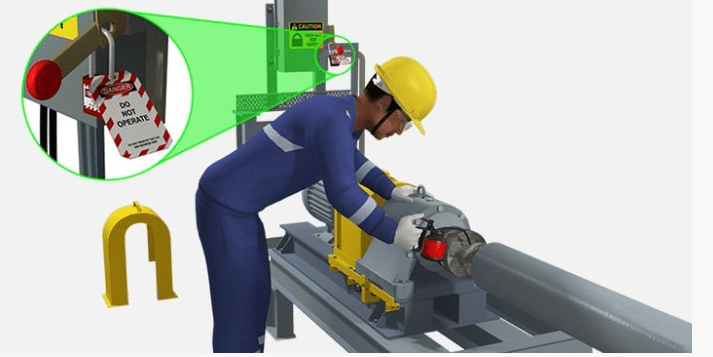
Worker Inspecting Machine Guard
Maintenance Best Practices
- Keep Guards Clean
- Remove debris, dust, grease, and buildup
- Ensure visibility through transparent guards is not obstructed
- Repair or Replace Immediately
- Do not operate equipment with damaged or missing guards
- Report issues promptly to supervisors or maintenance personnel
- Follow Lockout/Tagout Procedures
- Always de-energize equipment before performing maintenance
- Never attempt to adjust or repair guards while machinery is running
- Use Manufacturer Specifications
- Replace guards with approved parts only
- Avoid makeshift repairs that compromise safety
- Lubricate and Adjust Moving Guards
- Ensure hinges, tracks, and moving components operate smoothly
- Prevent sticking or delayed response in interlocked systems
Employee Responsibilities
- Conduct pre-use inspections
- Never remove or bypass guards
- Report on unsafe conditions immediately
- Follow all safety procedures and training
Supervisor Responsibilities
- Ensure regular inspection schedules are followed
- Provide proper training on guard use and maintenance
- Enforce compliance with safety policies
- Address reported issues without delay
Warning Signs of Unsafe Guards
Stop work immediately if you notice:
- Guard that rattles, shifts, or feel loose
- Gaps that expose moving parts
- Interlocks that fail to stop the machine
- Evidence of tampering or modification
Key Takeaway
Machine guards are a critical safety barrier—but only when they are properly maintained. Routine inspections, immediate repairs, and strict adherence to safety procedures ensure that guards perform as intended and protect everyone on the job.
Discussion Prompt
- When was the last time you inspected the guards on your equipment?
- Have you ever encountered a guard that was damaged or bypassed? What did you do?
Maintaining machine guards is not just a requirement, it is a responsibility that directly impacts workplace safety. A few moments spent inspecting a guard can prevent a life-altering injury.