
Toolbox Talk: Types of Machine Guards and Their Uses
April 17, 2026 2026-04-23 4:53Toolbox Talk: Types of Machine Guards and Their Uses
Types of Machine Guards and Their Uses
Toolbox Talk: Types of Machine Guards and Their Uses
Reference: OSHA 29 CFR 1910 Subpart O – Machinery and Machine Guarding
Purpose
Machine guarding is one of the most critical elements in workplace safety. Proper guards protect employees from hazards such as rotating parts, flying debris, pinch points, and the point of operation. Understanding the different types of machine guards and how they are used helps prevent serious injuries including amputations, lacerations, and crushing incidents.
What Is a Machine Guard?
A machine guard is any device or method designed to protect workers from hazardous mechanical motion. Guards act as a physical barrier or control mechanism that prevents contact with dangerous parts of machinery.
Types of Machine Guards and Their Uses
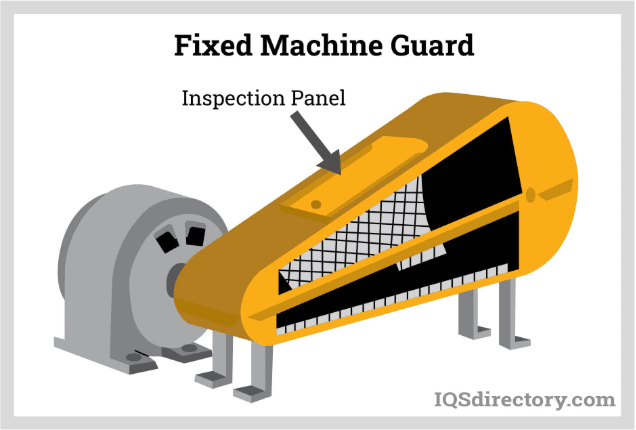
- Fixed Guards
Fixed guards are permanent parts of a machine. They are not dependent on moving components and remain in place during operation.
Uses:
- Ideal for protecting against rotating parts such as belts, pulleys, and gears
- Common on fans, motors, and power transmission equipment
Advantages:
- Provide constant protection
- Require minimal maintenance
- Interlocked Guards
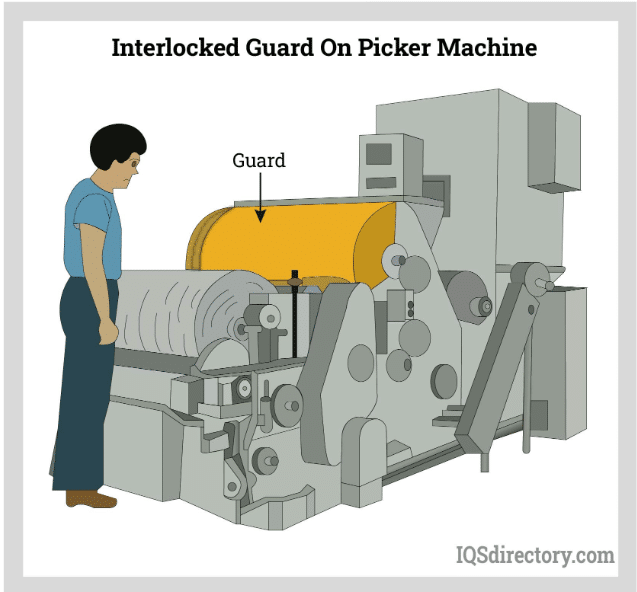
Interlocked guards are connected to the machine’s control system. When the guard is opened or removed, the machine automatically shuts down.
Uses:
- Equipment requiring frequent access, such as CNC machines or automated systems
- Situations where operators must access the hazard area safely
Advantages:
- Prevent machine operation when the guard is not in place
- Reduce risk of accidental startup
- Adjustable Guards
Adjustable guards can be moved to accommodate different sizes of materials or operations.
Uses:
- Common on saws, drills, and milling machines
- Allows flexibility while still providing protection
Advantages:
- Versatile for multiple tasks
- Can be positioned to maintain a safe barrier
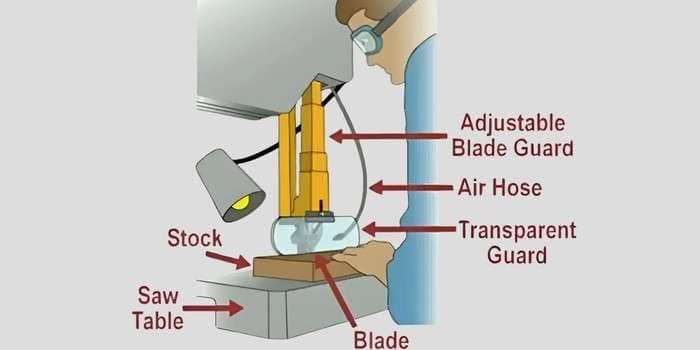
Adjustable Machine Guards
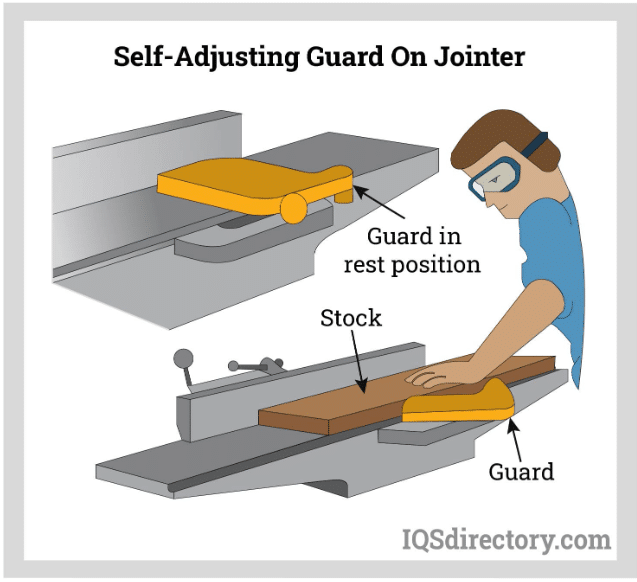
- Self-Adjusting Guards
These guards automatically adjust to the size of the stock entering the machine.
Uses:
- Frequently used on table saws and cutting equipment
- Moves away only enough to allow the material through
Advantages:
- Provides continuous protection
- Reduces operator error in positioning
- Presence-Sensing Devices
These are not physical guards but safety systems that detect when a worker is too close to a hazard.
Examples:
- Light curtains
- Pressure-sensitive mats
Uses:
- High-speed or automated machinery
- Areas where physical guards are not practical
Advantages:
- Stop the machine instantly when danger is detected
- Allow efficient workflow without compromising safety
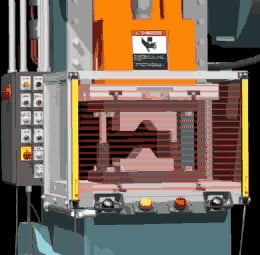
Presence-Sensing Devices Curtesy of OSHA
- Two-Hand Controls and Devices
These require the operator to use both hands to start or operate a machine, keeping hands away from danger zones.
Uses:
- Presses, stamping machines, and similar equipment
Advantages:
- Ensures hands are clear during operation
- Reduces risk of accidental contact
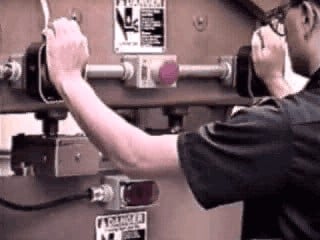
Press Operation Using Two Hand Control Curtesy of OSHA
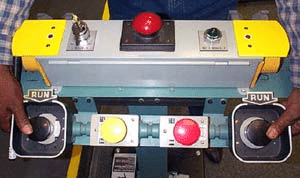
Two Hand Tripping Device Curtesy of OSHA
Key Safety Reminders
- Never remove, bypass, or disable machine guards
- Ensure guards are properly installed and secured before use
- Report damaged or missing guards immediately
- Follow lockout/tagout procedures before maintenance or adjustments
- Always use appropriate personal protective equipment (PPE)
Conclusion
Machine guards are your first line of defense against serious workplace injuries. Each type of guard serves a specific purpose and using them correctly is essential for maintaining a safe work environment. Consistent awareness and proper use of guarding systems help ensure that everyone goes home safely at the end of the day.