
Toolbox Talk: Identifying Permit-Required Confined Spaces & Hazards
April 21, 2026 2026-04-23 4:54Toolbox Talk: Identifying Permit-Required Confined Spaces & Hazards
Identifying Permit-Required Confined Spaces & Hazards
Toolbox Talk: Identifying Permit-Required Confined Spaces & Hazards
Standard: 29 CFR 1910.146 Permit-Required Confined Spaces standard
Purpose
The purpose of this toolbox talk is to help workers recognize permit-required confined spaces (PRCS) and understand the serious hazards associated with them. Proper identification is the first and most critical step in preventing injuries and fatalities.
What Is a Confined Space?
A space is considered a confined space if it:
- It is large enough for an employee to enter and perform work
- Has limited or restricted means for entry or exit
- It is not designed for continuous employee occupancy
Examples include tanks, silos, storage bins, vaults, pits, and manholes.
What Makes It “Permit-Required”?
A confined space becomes permit-required if it has one or more of the following hazards:
- Hazardous Atmosphere
- Low oxygen (below 19.5%)
- Toxic gases (e.g., hydrogen sulfide, carbon monoxide)
- Flammable vapors or dust
- Engulfment Hazards
- Liquids or flowing materials such as water, sand, or grain
- Configuration Hazards
- Inwardly sloping walls or floors
- Tapered bottoms that can trap or asphyxiate workers
- Other Serious Hazards
- Mechanical equipment
- Electrical hazards
- Extreme temperatures
- Chemical exposure
Why Identification Matters
Many confined space incidents occur because workers fail to recognize the danger before entering. Hazardous atmospheres are often invisible, odorless, and can incapacitate a person within seconds.
Failure to identify a permit-required confined space can lead to:
- Asphyxiation
- Toxic exposure
- Fires and explosions
- Engulfment and entrapment
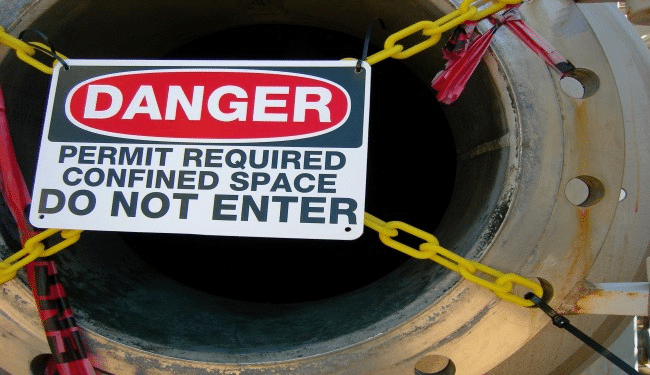
Example of a Permit Required Confined Space
Key Safety Reminders
- Never assume a space is safe. Always evaluate before entry.
- Look for warning signs and labels indicating permit-required spaces.
- Do not enter a permit-required confined space without proper authorization, training, and a completed entry permit.
- Atmospheric testing and hazard assessment are mandatory before entry.
- When in doubt, stop and ask a supervisor.
Discussion Questions
- What confined spaces exist at our job site?
- What hazards might be present in those spaces?
- How can we verify a space is safe before entering?
Takeaway Message
Recognizing a permit-required confined space is the first line of defense. If hazards are not properly identified and controlled, the risk of serious injury or death is extremely high. Always follow procedures and never take shortcuts when it comes to confined space entry.