
Toolbox Talk: How to Conduct a Workplace Inspection
April 23, 2026 2026-04-23 4:55Toolbox Talk: How to Conduct a Workplace Inspection
How to Conduct a Workplace Inspection
Toolbox Talk: How to Conduct a Workplace Inspection
Applicable OSHA Standards: 29 CFR 1910 (General Industry), including walking-working surfaces (1910 Subpart D), fire protection (1910 Subpart L), medical services and first aid (1910.151), hazard communication (1910.1200), and electrical safety (1910 Subpart S)
Purpose
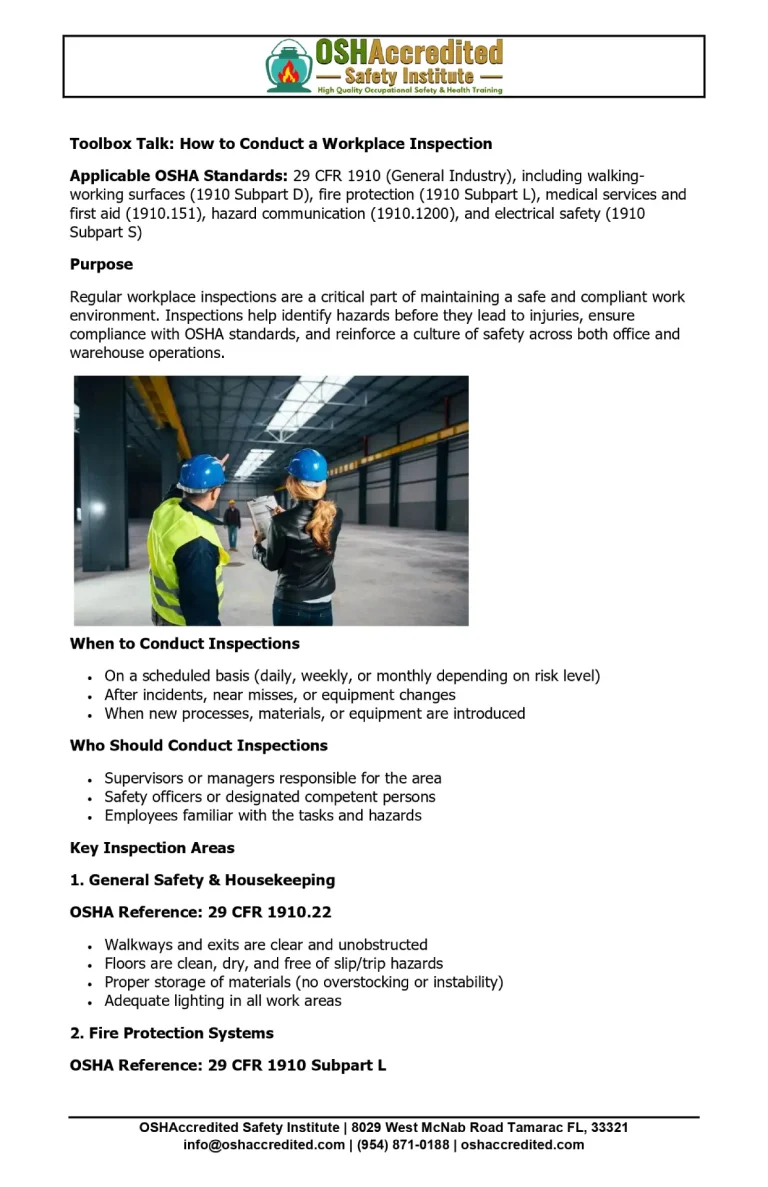
Regular workplace inspections are a critical part of maintaining a safe and compliant work environment. Inspections help identify hazards before they lead to injuries, ensure compliance with OSHA standards, and reinforce a culture of safety across both office and warehouse operations.

When to Conduct Inspections
- On a scheduled basis (daily, weekly, or monthly depending on risk level)
- After incidents, near misses, or equipment changes
- When new processes, materials, or equipment are introduced
Who Should Conduct Inspections
- Supervisors or managers responsible for the area
- Safety officers or designated competent persons
- Employees familiar with the tasks and hazards
Key Inspection Areas
- General Safety & Housekeeping
OSHA Reference: 29 CFR 1910.22
- Walkways and exits are clear and unobstructed
- Floors are clean, dry, and free of slip/trip hazards
- Proper storage of materials (no overstocking or instability)
- Adequate lighting in all work areas
- Fire Protection Systems
OSHA Reference: 29 CFR 1910 Subpart L
Office & Warehouse:
- Fire extinguishers are accessible, mounted, and inspected monthly
- Inspection tags are up to date
- Employees are trained in extinguisher use (PASS method)
Warehouse (Sprinkler System):
- Sprinkler heads are not obstructed or damaged
- Proper clearance (typically 18 inches below sprinkler heads)
- Control valves are accessible and clearly labeled
- No storage hanging from or interfering with sprinkler piping
- Emergency Equipment (AEDs & First Aid)
OSHA Reference: 29 CFR 1910.151
- AEDs are clearly marked, accessible, and inspected regularly
- Batteries and pads are within expiration dates
- First aid kits are fully stocked and easily accessible
- Emergency contact numbers are posted and visible
- Electrical Safety
OSHA Reference: 29 CFR 1910 Subpart S
- No exposed or damaged wiring
- Electrical panels are accessible (minimum 36 inches clearance)
- All panels are properly labeled
- Extension cords are used only temporarily and not as permanent wiring
- Hazard Communication
OSHA Reference: 29 CFR 1910.1200
- All chemicals are properly labeled
- Safety Data Sheets (SDS) are accessible to employees
- Employees are trained in chemical hazards
- Proper storage and segregation of hazardous materials
- Personal Protective Equipment (PPE)
OSHA Reference: 29 CFR 1910 Subpart I
- Appropriate PPE is available and in good condition
- Employees are using PPE where required
- PPE is stored properly and replaced when damaged
- Warehouse-Specific Hazards
Material Handling & Storage:
- Pallets are in good condition (no broken boards or protruding nails)
- Loads are stable and properly stacked
- Aisles are clearly marked and maintained
Powered Industrial Trucks (Forklifts):
OSHA Reference: 29 CFR 1910.178
- Daily inspections are completed and documented
- Operators are trained and certified
- Seatbelts are used and equipment is in safe working condition
- Means of Egress (Emergency Exits)
OSHA Reference: 29 CFR 1910.36–37
- Exit routes are clearly marked and illuminated
- Doors are unlocked and open easily from the inside
- Exit pathways are free from obstructions
Best Practices for Effective Inspections
- Use a standardized checklist for consistency
- Take notes and photos of hazards
- Correct hazards immediately when possible
- Assign responsibility and deadlines for corrective actions
- Follow up to ensure issues are resolved
Employee Involvement
Encourage employees to report hazards and participate in inspections. They often see risks that may be overlooked and play a key role in maintaining a safe workplace.
Key Takeaway
A thorough workplace inspection is more than a checklist, a proactive effort to protect employees, ensure compliance, and prevent incidents. Consistency, attention to detail, and timely corrective action are essential for an effective inspection program.
Stay alert. Spot hazards early. Fix them fast. Safety is everyone’s responsibility.