Concrete Work Safety: Identifying and Preventing Hazards
Concrete Work Safety: Identifying and Preventing Hazards
December 14, 20252025-12-21 1:35
Concrete Work Safety: Identifying and Preventing Hazards
Concrete Work Safety: Identifying and Preventing Hazards
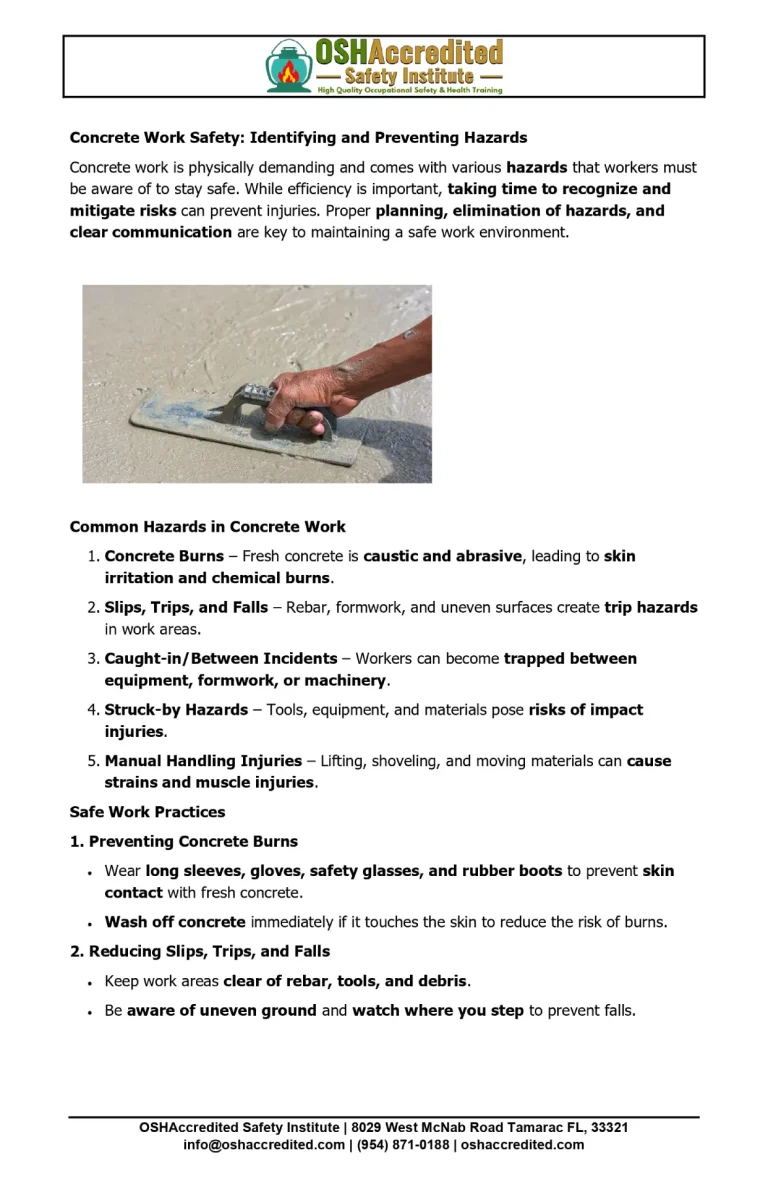
Concrete work is physically demanding and comes with various hazards that workers must be aware of to stay safe. While efficiency is important, taking time to recognize and mitigate risks can prevent injuries. Proper planning, elimination of hazards, and clear communication are key to maintaining a safe work environment.
Common Hazards in Concrete Work
Concrete Burns – Fresh concrete is caustic and abrasive, leading to skin irritation and chemical burns.
Slips, Trips, and Falls – Rebar, formwork, and uneven surfaces create trip hazards in work areas.
Caught-in/Between Incidents – Workers can become trapped between equipment, formwork, or machinery.
Struck-by Hazards – Tools, equipment, and materials pose risks of impact injuries.
Manual Handling Injuries – Lifting, shoveling, and moving materials can cause strains and muscle injuries.
Safe Work Practices
Preventing Concrete Burns
Wear long sleeves, gloves, safety glasses, and rubber boots to prevent skin contact with fresh concrete.
Wash off concrete immediately if it touches the skin to reduce the risk of burns.
Reducing Slips, Trips, and Falls
Keep work areas clear of rebar, tools, and debris.
Be aware of uneven ground and watch where you step to prevent falls.
Avoiding Struck-by Hazards
Use tools correctly and maintain a secure grip when swinging hammers or handling equipment.
Be cautious around concrete pump booms and truck chutes—wear a hard hat and use a spotter to communicate movements.
Preventing Manual Handling Injuries
Use proper lifting techniques: lift with your legs, not your back.
Work with a buddy when moving heavy or awkward objects.
When shoveling, avoid twisting your back and handle only a manageable amount of material.
Start each shift with stretching or light movement to warm up muscles and prevent strains.
Key Takeaway: Prioritize Safety and Teamwork
Concrete work can be hazardous but preplanning and hazard recognition are critical in preventing injuries. Communicating with coworkers, maintaining a clean work area, and using proper safety practices make the job site safer for everyone. Before starting work, assess your surroundings and eliminate as many hazards as possible.