Excavation Safety: Preventing Hazards on the Job Site
Excavation Safety: Preventing Hazards on the Job Site
December 8, 20252025-12-21 1:07
Excavation Safety: Preventing Hazards on the Job Site
Excavation Safety: Preventing Hazards on the Job Site
Excavation work is a routine part of construction, but it presents serious risks. According to the Bureau of Labor Statistics, 97 trenching-related fatalities occurred in the construction industry between 2013 and 2017—an average of 19 per year, with fatalities ranging from 10 in 2014 to 33 in 2016 (BLS, 2019). However, by following proper safety protocols, excavation work can be significantly safer.
Cave-ins and collapses – The most severe hazard, often leading to fatalities.
Water accumulation – Increases the risk of drowning and weakens trench walls.
Falls into excavations – Posing a risk to both workers and bystanders.
Utility strikes – Hitting underground utilities can cause electrocution, gas leaks, or service disruptions.
Hazardous gases – Toxic or oxygen-deficient atmospheres can develop in excavations.
Best Practices for Excavation Safety
Implement Protective Systems
Follow OSHA’s protective system requirements based on soil classification.
Most excavated soil is classified as “Type C,” the least stable and most dangerous.
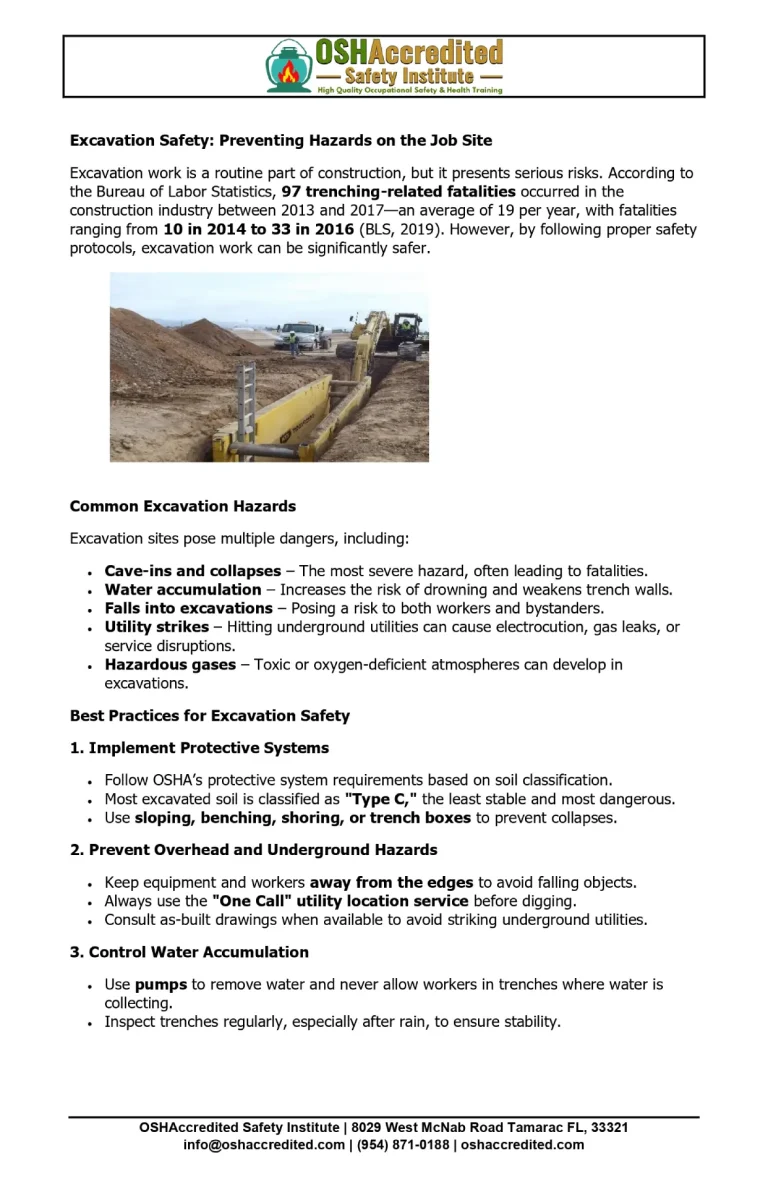
Use sloping, benching, shoring, or trench boxes to prevent collapses.
Prevent Overhead and Underground Hazards
Keep equipment and workers away from the edges to avoid falling objects.
Always use the “One Call” utility location service before digging.
Consult as-built drawings when available to avoid striking underground utilities.
Control Water Accumulation
Use pumps to remove water and never allow workers in trenches where water is collecting.
Inspect trenches regularly, especially after rain, to ensure stability.
Secure the Excavation Site
Never leave an excavation open and unprotected when work is not in progress.
Use barricades, fencing, and signage to prevent falls and vehicle accidents.
Test for Hazardous Atmospheres
If there is a risk of toxic gases or low oxygen levels, perform gas testing.
Pay special attention to low areas where gases may accumulate before workers enter.
Key Takeaway: Prioritize Safety to Prevent Excavation Fatalities
Excavation work can be extremely dangerous if proper precautions aren’t taken. By implementing protective systems, preventing hazards, managing water accumulation, securing the site, and testing for hazardous atmospheres, workers can minimize risks and ensure a safer work environment. Always follow OSHA guidelines and conduct thorough safety assessments before starting excavation work.