Weather significantly affects outdoor construction work, yet high winds are often overlooked compared to rain, snow, or extreme temperatures. Strong winds can create serious safety risks on a construction site, making it essential to recognize potential hazards and implement preventative measures.
Common Hazards Caused by High Winds
The risks associated with windy conditions depend on the type of work being performed. However, several hazards are common across most construction sites:
Strains and sprains from the wind pulling doors or materials from workers’ hands.
Struck-by incidents due to unsecured objects being blown around.
Slips, trips, and falls caused by workers reacting to a falling hard hat or other wind-displaced objects.
Eye injuries from airborne dust, dirt, and debris.
Dropped loads during lifting operations, increasing the risk of severe injuries.
Falling objects from scaffolding, rooftops, or other elevated surfaces.
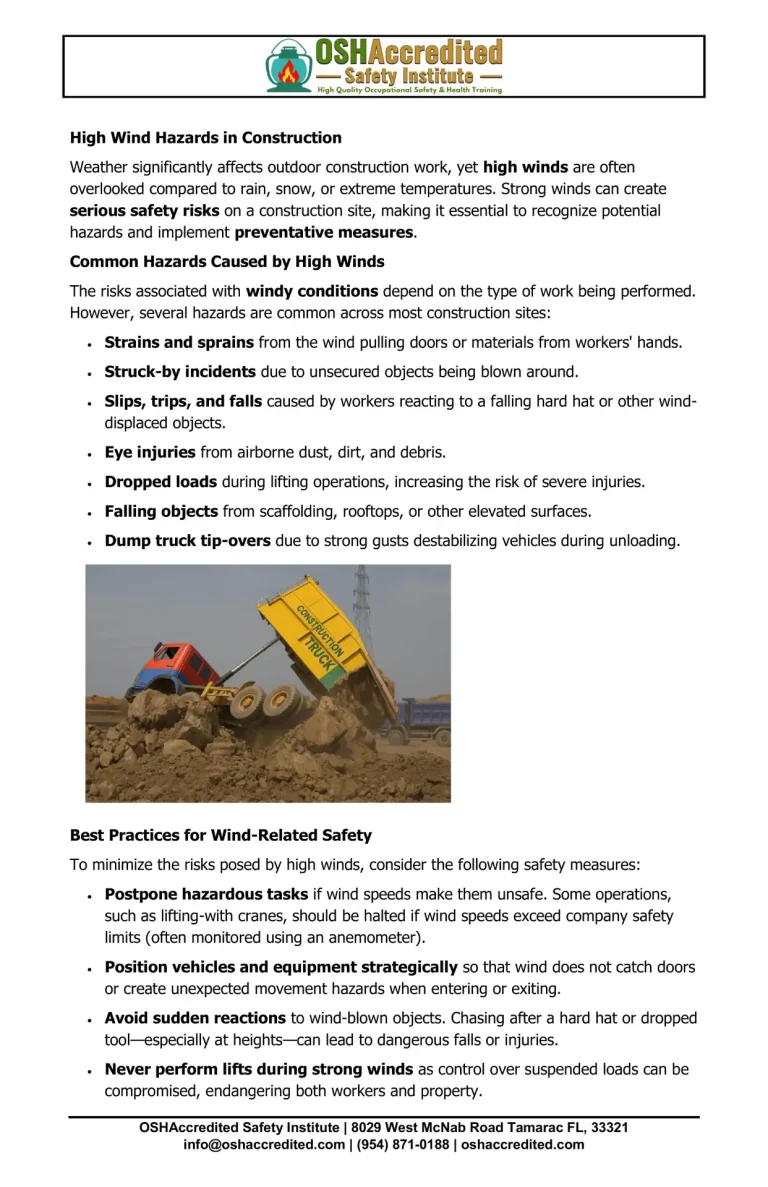
Dump truck tip-overs due to strong gusts destabilizing vehicles during unloading.
Best Practices for Wind-Related Safety
To minimize the risks posed by high winds, consider the following safety measures:
Postpone hazardous tasks if wind speeds make them unsafe. Some operations, such as lifting-with cranes, should be halted if wind speeds exceed company safety limits (often monitored using an anemometer).
Position vehicles and equipment strategically so that wind does not catch doors or create unexpected movement hazards when entering or exiting.
Avoid sudden reactions to wind-blown objects. Chasing after a hard hat or dropped tool—especially at heights—can lead to dangerous falls or injuries.
Never perform lifts during strong winds as control over suspended loads can be compromised, endangering both workers and property.
Stay out of the “line of fire” by avoiding areas beneath suspended loads, near dump trucks unloading materials, or downwind from blowing debris.
Use proper eye protection—at a minimum, wear safety glasses, and switch to goggles if conditions warrant additional protection.
Key Takeaway: Plan for Wind Hazards
Weather conditions should always be considered when planning construction tasks. High winds can make certain activities too dangerous to perform, so adjust work schedules accordingly. By implementing proper safety measures, workers can reduce risks and prevent injuries when working in windy conditions.