
How to Inspect Supported Scaffolds
January 21, 2026 2026-01-21 10:10How to Inspect Supported Scaffolds
How to Inspect Supported Scaffolds
How to Inspect Supported Scaffolds
What Are Supported Scaffolds?
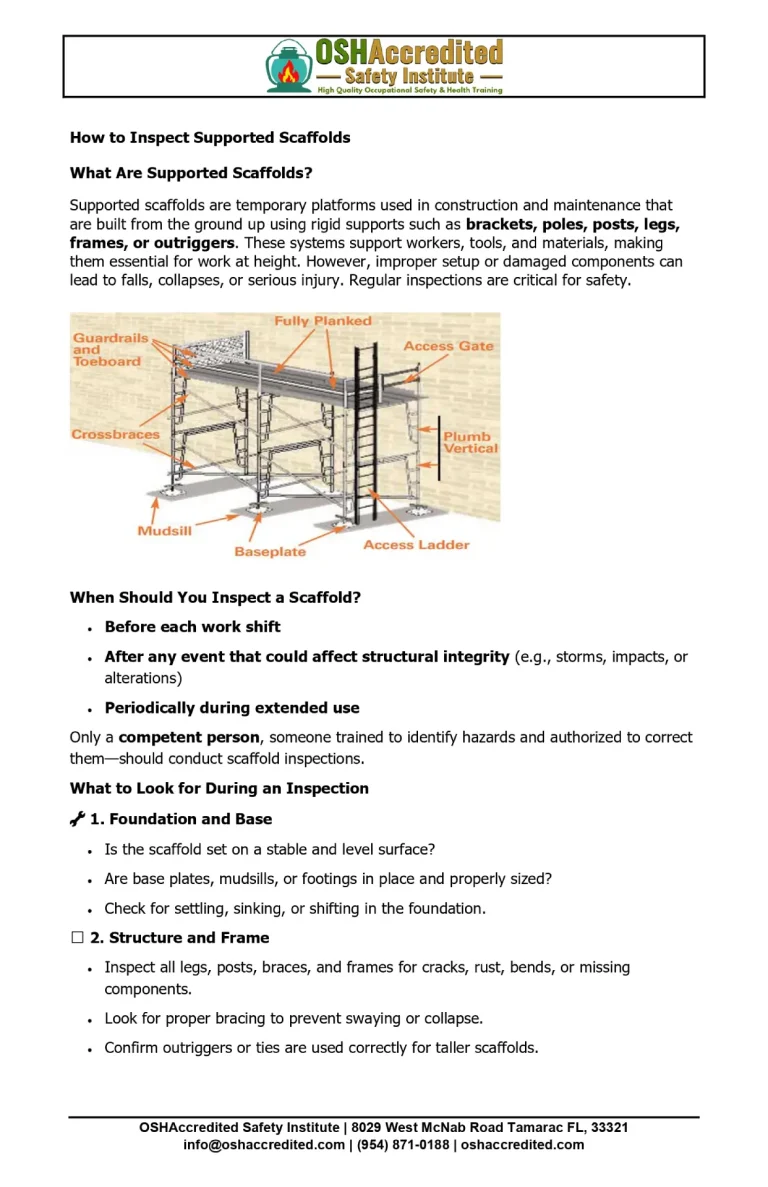
Supported scaffolds are temporary platforms used in construction and maintenance that are built from the ground up using rigid supports such as brackets, poles, posts, legs, frames, or outriggers. These systems support workers, tools, and materials, making them essential for work at height. However, improper setup or damaged components can lead to falls, collapses, or serious injury. Regular inspections are critical for safety.

When Should You Inspect a Scaffold?
- Before each work shift
- After any event that could affect structural integrity (e.g., storms, impacts, or alterations)
- Periodically during extended use
Only a competent person, someone trained to identify hazards and authorized to correct them—should conduct scaffold inspections.
What to Look for During an Inspection
🔧 1. Foundation and Base
- Is the scaffold set on a stable and level surface?
- Are base plates, mudsills, or footings in place and properly sized?
- Check for settling, sinking, or shifting in the foundation.
🧱 2. Structure and Frame
- Inspect all legs, posts, braces, and frames for cracks, rust, bends, or missing components.
- Look for proper bracing to prevent swaying or collapse.
- Confirm outriggers or ties are used correctly for taller scaffolds.
🔩 3. Planking and Platforms
- All planks must be fully decked with no gaps or broken boards.
- Planking should be grade-approved, not warped, split, or painted (paint can hide defects).
- Platforms must overlap properly and extend 6–12 inches over supports, unless cleated or secured.
🪜 4. Guardrails and Fall Protection
- Guardrails, midrails, and toe boards must be installed on platforms over 10 feet high.
- Check for secure railings with no missing or loose parts.
- Personal fall arrest systems may be required depending on the scaffold type and height.
🛠 5. Access and Egress
- Ladders or stair systems must be provided and safely secured.
- Access points should be clear of obstructions and not require climbing on cross braces.
⚠️ 6. Tagging System
- Use a visible scaffold tag system:
- Green tag – Safe to use.
- Yellow tag – Use with caution or under specific conditions.
- Red tag – Unsafe; do not use until repaired.
Extra Tips for Scaffold Safety
- Never modify a scaffold without approval from a competent person.
- Remove snow, ice, or slippery substances before use.
- Keep platforms clear of clutter and trip hazards.
- Always report damaged or missing components immediately.
Summary
Proper inspection of supported scaffolds saves lives. Make it a habit to check the base, structure, platforms, guardrails, and access points before each shift. When in doubt, stop and report the issue. Only a solid, well-inspected scaffold is a safe one.
✅ Inspect before every shift
✅ Report any damage immediately
✅ Never use a scaffold unless it’s tagged safe