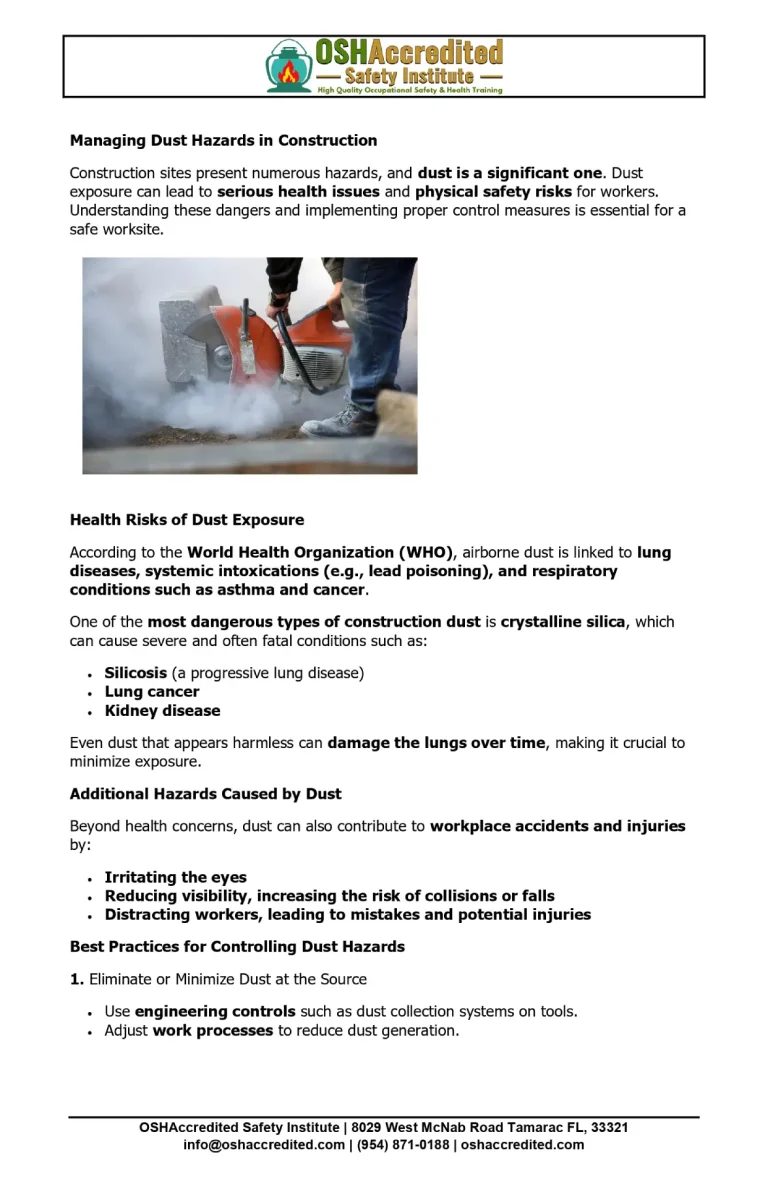
Construction sites present numerous hazards, and dust is a significant one. Dust exposure can lead to serious health issues and physical safety risks for workers. Understanding these dangers and implementing proper control measures is essential for a safe worksite.
Health Risks of Dust Exposure
According to the World Health Organization (WHO), airborne dust is linked to lung diseases, systemic intoxications (e.g., lead poisoning), and respiratory conditions such as asthma and cancer.
One of the most dangerous types of construction dust is crystalline silica, which can cause severe and often fatal conditions such as:
Silicosis (a progressive lung disease)
Lung cancer
Kidney disease
Even dust that appears harmless can damage the lungs over time, making it crucial to minimize exposure.
Additional Hazards Caused by Dust
Beyond health concerns, dust can also contribute to workplace accidents and injuries by:
Irritating the eyes
Reducing visibility, increasing the risk of collisions or falls
Distracting workers, leading to mistakes and potential injuries
Best Practices for Controlling Dust Hazards
Eliminate or Minimize Dust at the Source
Use engineering controls such as dust collection systems on tools.
Adjust work processes to reduce dust generation.
Use Wet Methods for Dust Suppression
Apply water when cutting or breaking concrete, brick, or stone.
Spray water on roadways or work areas to reduce airborne dust.
Control Dust from Vehicles and Equipment
Keep vehicle speeds low in dusty conditions.
Use vacuum systems to collect dust at the point of operation.
Protect Workers with Proper PPE
Wear respirators when dust control measures are insufficient.
Avoid standing downwind of dust-generating activities whenever possible.
Key Takeaway: Proactive Dust Control Protects Workers
Dust is more than just a nuisance—it poses serious long-term health risks and immediate safety hazards. The best approach is elimination through engineering controls, wet methods, and proper worksite practices. By actively managing dust, workers can stay safe and healthy on the job.