Ensuring a safe construction site requires following basic safety rules to prevent injuries and fatalities. These guidelines help workers stay aware of hazards and take proactive measures to protect themselves and others.
Always Wear Your Seatbelt
Whether in a vehicle or heavy equipment, seatbelts are essential for preventing serious injuries or fatalities in crashes.
Motor vehicle accidents remain the leading cause of work-related fatalities in the U.S.
Inspect Tools and Equipment Before Use
Check tools and machinery before starting work to ensure they are in safe working condition.
Repair or replace damaged equipment and verify that safety features (e.g., kill switches, guards) are functioning correctly.
Use Fall Protection When Working at Heights
Falls are the leading cause of construction fatalities (excluding highway collisions).
Always use guardrails, full-body harnesses, and self-retracting lanyards to mitigate fall risks.
Stay Out of Heavy Equipment Blind Spots
Struck-by and caught-in/between incidents often occur when ground personnel are too close to operating machinery.
Keep a safe distance, establish eye contact with operators, and communicate clearly before approaching.
Avoid Being in the Line of Fire
Stay clear of potential danger zones, such as:
Under suspended loads
Near stored energy sources (e.g., pressurized pipes being cut)
Beneath improperly supported machinery
Maintain Clean Work Areas
Good housekeeping prevents injuries like slips, trips, falls, and lacerations.
Organize tools and materials properly to avoid damage and reduce fire or crushing hazards.
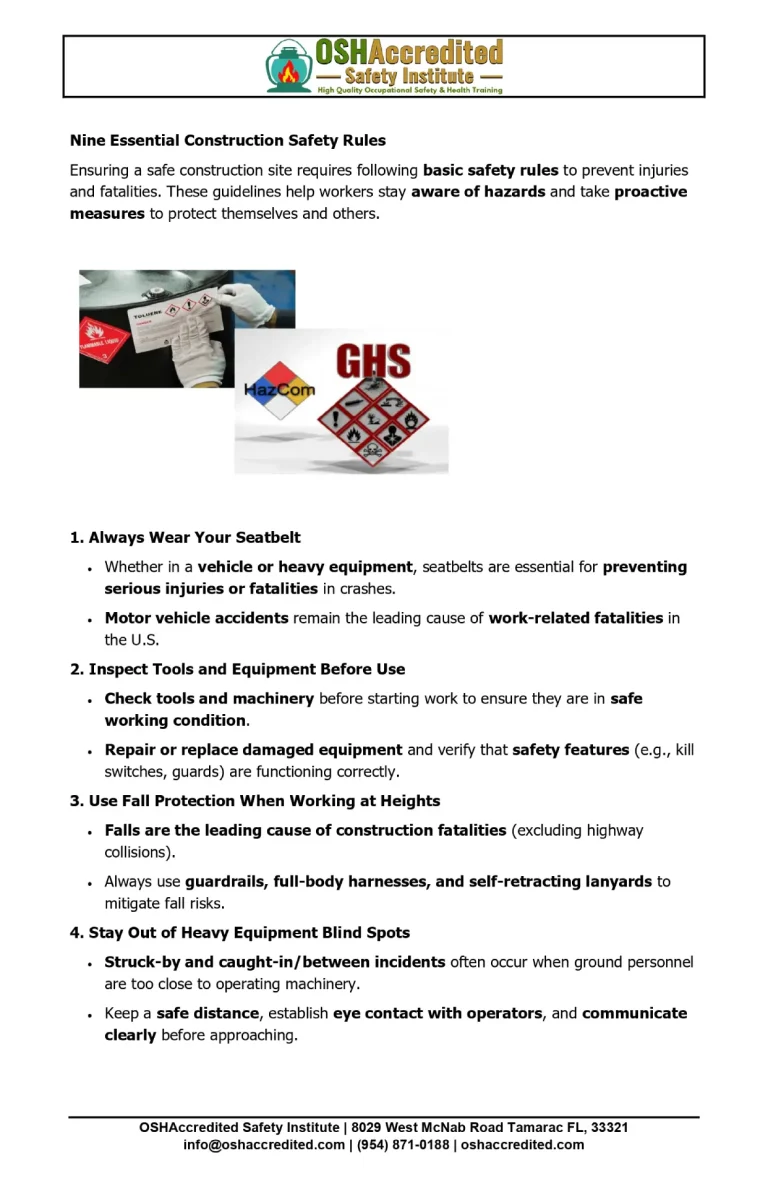
Store and Label Chemicals Correctly
Hazard communication violations are among OSHA’s most frequent citations.
Ensure chemicals are labeled properly and stored safely to prevent fires, spills, and corrosive injuries.
Communicate Hazards to Others
Never assume everyone is aware of a hazard, especially new workers.
Update coworkers on changing site conditions and inform them about potential risks.
Stop Work If Safety is Compromised
Pause work to address hazards before continuing.
If necessary, involve supervisors or safety personnel to implement proper safety measures.
Key Takeaway: Safety First, Always
Following these nine fundamental safety rules ensures a safer work environment for everyone. Taking preventative actions, maintaining clear communication, and addressing hazards immediately can reduce risks and save lives on the job site.