
Preventing and Responding to Concrete Burns
December 14, 2025 2025-12-21 1:39Preventing and Responding to Concrete Burns
Preventing and Responding to Concrete Burns
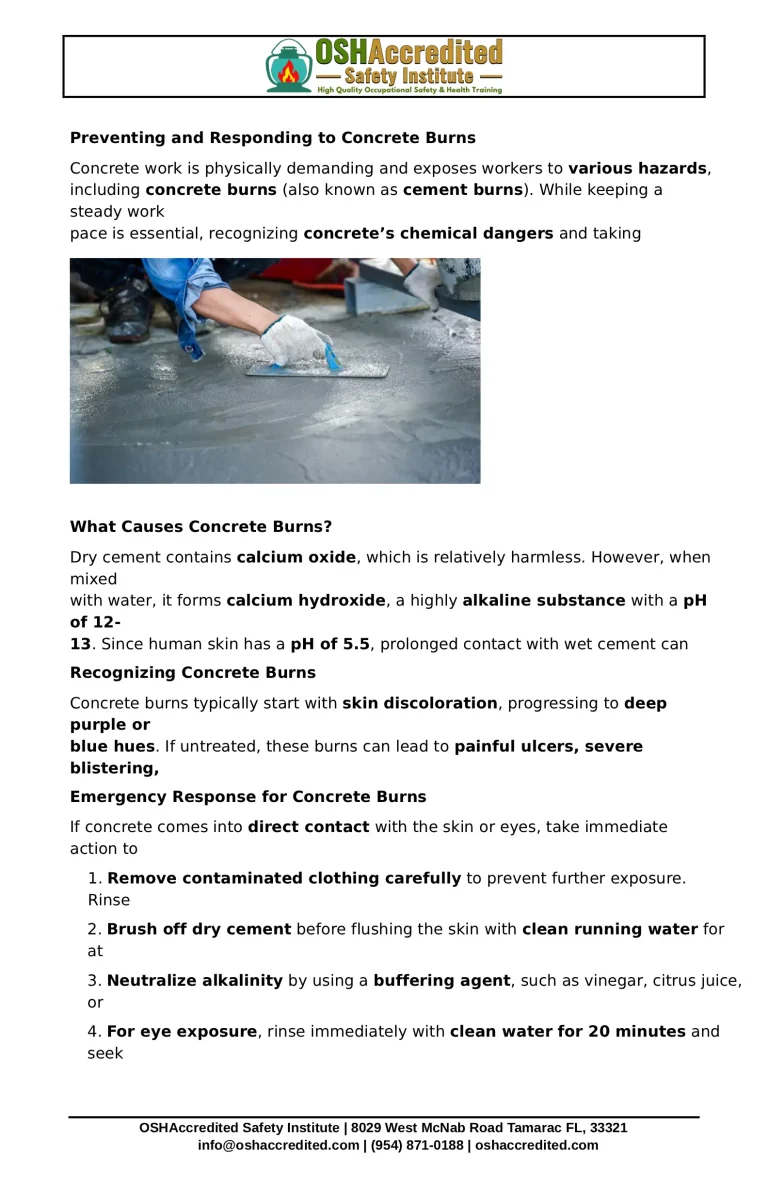
Concrete work is physically demanding and exposes workers to various hazards, including concrete burns (also known as cement burns). While keeping a steady work pace is essential, recognizing concrete’s chemical dangers and taking preventative measures is critical to worker safety.

What Causes Concrete Burns?
Dry cement contains calcium oxide, which is relatively harmless. However, when mixed with water, it forms calcium hydroxide, a highly alkaline substance with a pH of 12-13. Since human skin has a pH of 5.5, prolonged contact with wet cement can cause chemical burns that worsen over time, even if there is no immediate discomfort. Early detection of skin irritation is crucial to prevent severe injuries.
Recognizing Concrete Burns
Concrete burns typically start with skin discoloration, progressing to deep purple or blue hues. If untreated, these burns can lead to painful ulcers, severe blistering, and, in extreme cases, tissue damage requiring amputation. Some workers also develop allergic dermatitis due to cement exposure.
Emergency Response for Concrete Burns
If concrete comes into direct contact with the skin or eyes, take immediate action to reduce its harmful effects:
- Remove contaminated clothing carefully to prevent further exposure. Rinse clothing with clean water.
- Brush off dry cement before flushing the skin with clean running water for at least 20 minutes.
- Neutralize alkalinity by using a buffering agent, such as vinegar, citrus juice, or a specialized neutralizing solution.
- For eye exposure, rinse immediately with clean water for 20 minutes and seek medical assistance.
- Get professional medical attention promptly. Provide the doctor with the Safety Data Sheet (SDS) for cement products and reference materials on concrete-related injuries.
Preventing Concrete Burns
Proper preparation and protective measures reduce the risk of burns. Essential safety supplies for a concrete worksite include:
- Clean running water (at least 5-7 gallons per worker per day)
- pH-neutral soap to counteract the effects of caustic cement
- Buffering solutions like Mason’s Hand Rinse or Neutra lite
- Clean towels for immediate skin cleaning
- pH indicator strips (1-14 range) to test skin, work surfaces, and clothing for alkaline contamination
Recommended Personal Protective Equipment (PPE)
The National Precast Concrete Association (NPCA) suggests the following PPE for concrete workers:
- Safety goggles or side-shield glasses to protect against dust and splashes
- Alkali-resistant gloves (butyl or nitrile gloves)
- Long-sleeved shirts and pants tucked into gloves and boots
- Waterproof knee, elbow, and hand pads to protect frequent contact points
- No jewelry or accessories, as wet cement can get trapped and cause burns
Key Takeaway: Prioritize Protection
Concrete burns can occur without immediate symptoms, making prevention and early detection critical. Always wear proper PPE, keep safety supplies on hand, and rinse any exposed skin immediately. By taking these precautions, workers can reduce the risk of severe injuries and stay safe on the job.