
Silica Dust Dangers and Safety Measures
January 17, 2026 2026-01-17 9:15Silica Dust Dangers and Safety Measures
Silica Dust Dangers and Safety Measures
Silica Dust Dangers and Safety Measures
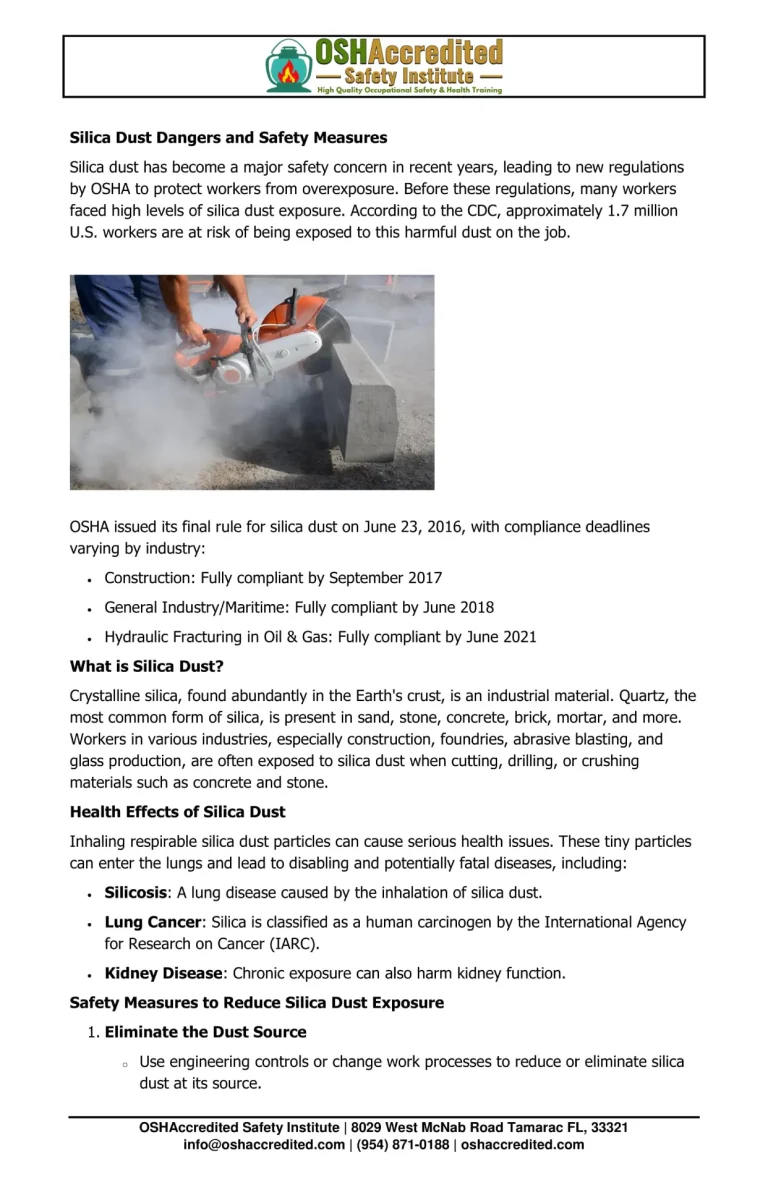
Silica dust has become a major safety concern in recent years, leading to new regulations by OSHA to protect workers from overexposure. Before these regulations, many workers faced high levels of silica dust exposure. According to the CDC, approximately 1.7 million U.S. workers are at risk of being exposed to this harmful dust on the job.

OSHA issued its final rule for silica dust on June 23, 2016, with compliance deadlines varying by industry:
- Construction: Fully compliant by September 2017
- General Industry/Maritime: Fully compliant by June 2018
- Hydraulic Fracturing in Oil & Gas: Fully compliant by June 2021
What is Silica Dust?
Crystalline silica, found abundantly in the Earth’s crust, is an industrial material. Quartz, the most common form of silica, is present in sand, stone, concrete, brick, mortar, and more. Workers in various industries, especially construction, foundries, abrasive blasting, and glass production, are often exposed to silica dust when cutting, drilling, or crushing materials such as concrete and stone.
Health Effects of Silica Dust
Inhaling respirable silica dust particles can cause serious health issues. These tiny particles can enter the lungs and lead to disabling and potentially fatal diseases, including:
- Silicosis: A lung disease caused by the inhalation of silica dust.
- Lung Cancer: Silica is classified as a human carcinogen by the International Agency for Research on Cancer (IARC).
- Kidney Disease: Chronic exposure can also harm kidney function.
Safety Measures to Reduce Silica Dust Exposure
- Eliminate the Dust Source
- Use engineering controls or change work processes to reduce or eliminate silica dust at its source.
- Dust Collection Systems
- Implement vacuum or collection systems to capture dust at the point of operation, preventing it from becoming airborne.
- Use Wet Methods
- Wet cutting or breaking of concrete and other silica-containing materials helps suppress dust at the source.
- Water Suppression
- Apply water to roadways and work areas to keep dust levels low.
- Avoid High Dust Areas
- Stay away from areas with high silica dust concentrations and avoid being downwind of these zones.
- Use Respirators
- When engineering controls aren’t enough to reduce dust levels, wear proper respirators to protect against inhalation.
Summary
Silica dust exposure presents significant health risks, but with proper safety measures and adherence to new regulations, these dangers can be minimized. Eliminating the source of dust, using dust control systems, and protecting workers with appropriate personal protective equipment are key steps in safeguarding workers from the harmful effects of silica dust.