
Toolbox Talk: Driving on Winding Roads
April 3, 2026 2026-04-23 4:50Toolbox Talk: Driving on Winding Roads
Driving on Winding Roads
Toolbox Talk: Driving on Winding Roads
Introduction
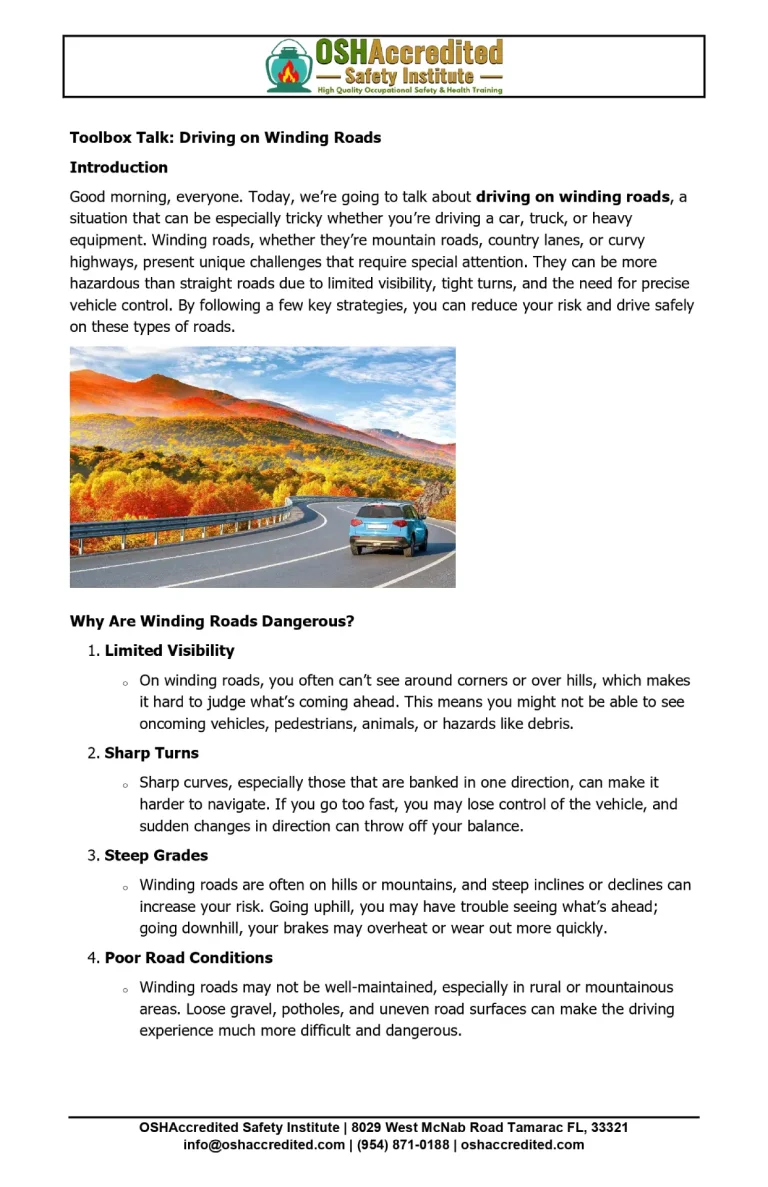
Good morning, everyone. Today, we’re going to talk about driving on winding roads, a situation that can be especially tricky whether you’re driving a car, truck, or heavy equipment. Winding roads, whether they’re mountain roads, country lanes, or curvy highways, present unique challenges that require special attention. They can be more hazardous than straight roads due to limited visibility, tight turns, and the need for precise vehicle control. By following a few key strategies, you can reduce your risk and drive safely on these types of roads.

Why Are Winding Roads Dangerous?
- Limited Visibility
- On winding roads, you often can’t see around corners or over hills, which makes it hard to judge what’s coming ahead. This means you might not be able to see oncoming vehicles, pedestrians, animals, or hazards like debris.
- Sharp Turns
- Sharp curves, especially those that are banked in one direction, can make it harder to navigate. If you go too fast, you may lose control of the vehicle, and sudden changes in direction can throw off your balance.
- Steep Grades
- Winding roads are often on hills or mountains, and steep inclines or declines can increase your risk. Going uphill, you may have trouble seeing what’s ahead; going downhill, your brakes may overheat or wear out more quickly.
- Poor Road Conditions
- Winding roads may not be well-maintained, especially in rural or mountainous areas. Loose gravel, potholes, and uneven road surfaces can make the driving experience much more difficult and dangerous.
- Other Drivers
- Many drivers tend to take winding roads too fast, tailgate, or make aggressive lane changes. If you’re not careful, you may find yourself in an unsafe situation due to someone else’s poor judgment.
Key Tips for Driving Safely on Winding Roads
- Slow Down Before the Curve
- Reduce Speed in Advance: As you approach a curve, slow down before entering it. This gives you time to make-adjustments and ensures you’re not trying to make the turn at an unsafe speed.
- Tip: If you see a speed limit sign for a curve, follow it. Don’t rely on your ability to drive faster; the road may be more difficult than it looks.
- Position Your Vehicle Correctly
- Stay in Your Lane: It can be tempting to cut corners but always stay in your lane when driving on winding roads. Cutting the curve or straddling lanes increases the risk of colliding with oncoming vehicles.
- Use Your Mirrors: Be sure to check your mirrors before turning, especially on sharp curves. You need to be aware of what’s behind and beside you.
- Use the Right Gear
- Manual Transmission: If you’re driving a manual vehicle, downshift to a lower gear before you enter a curve, especially when going uphill or downhill. This will give you better control and prevent the engine from straining.
- Automatic Transmission: For automatic vehicles, the car will downshift automatically, but you may still want to adjust your speed before the curve to give yourself more control.
- Keep a Safe Following Distance
- Increase Your Distance: On winding roads, you need extra time to react to unexpected stops or obstacles. Maintain at least a 3-4 second following distance from the vehicle in front of you. If the road is narrow or the turns are sharp, increase that distance.
- Tip: Always be prepared to stop if the driver in front of you is going too slow or has to brake unexpectedly.
- Be Mindful of Weather Conditions
- Wet or Icy Roads: Winding roads can be especially dangerous in wet or icy weather because the turns may become slick. Reduce your speed even more in these conditions and always drive with extra caution.
- Fog: Fog or mist is common on winding roads, especially in the early morning or late evening. Use your low beam headlights and reduce your speed to allow for limited visibility.
- Use the “Look Ahead” Technique
- Anticipate the Road Ahead: As you approach a curve, try to look through the turn. This helps you see the road’s layout and any potential hazards like rocks or other vehicles. Always be aware of what’s on the other side of the curve.
- Stay Focused: Keep your eyes on the road and avoid distractions. The more focused you are, the quicker you can respond to any changes in the road or conditions.
- Don’t Overdrive Your Vehicle’s Capabilities
- Know Your Limits: If you’re driving a larger vehicle or heavy equipment, don’t try to take tight corners too quickly. These vehicles have longer stopping distances and require more space to turn.
- Brake Gently: Avoid heavy braking on curves. Sudden braking can cause your vehicle to skid or lose control.
- Watch for Road Signs
- Many winding roads have signs warning you of upcoming curves, steep grades, or poor road conditions. Always pay attention to these warnings and adjust your driving accordingly.
- Look for signs indicating sharp curves and be ready to slow down.
- Stay in the Right Lane
- On winding roads with multiple lanes, always stay in the right lane unless you’re passing. The left lane is often used for passing or for curves that require more space, so stick to the right to give yourself more room to maneuver.
- Know When to Stop for a Break
- If you feel fatigued or if the road conditions are overwhelming, pull over in a safe spot to rest. Tired driving on winding roads can be dangerous, as your reaction time is slower, and your decision-making may suffer.
- Take a break every couple of hours to refresh yourself, especially if you’re driving long distances.
Special Considerations for Heavy Vehicles
- Know Your Vehicle’s Turning Radius
- Heavy vehicles, like trucks or buses, have a wider turning radius. Don’t attempt to make sharp turns too quickly and avoid cutting corners too tightly.
- Use Low Gears Going Downhill
- On steep inclines or declines, always use lower gears to control your speed. This reduces the strain on your brakes and ensures you maintain a safe speed while going downhill.
- Watch for Blind Corners
- Winding roads often have blind spots, and you may not see vehicles or hazards coming around the corner. Slow down even more when navigating blind corners and be prepared for the unexpected.
- Check Your Load
- Before taking a winding road, make sure your load is properly secured and balanced. If the load shifts while turning, it can cause the vehicle to become unstable.
What to Do If You Lose Control
If you do lose control while driving on a winding road (due to slippery conditions, high speed, etc.):
- Don’t Panic: Stay calm and focus on regaining control.
- Ease Off the Gas: Gradually release the accelerator to slow down, but don’t slam on the brakes.
- Steer into the Skid: If the rear of your vehicle begins to skid, steer gently into the skid, not against it, to regain control.
- Avoid Overcorrecting: Overcorrecting or making sudden movements can make the situation worse. Make smooth, gradual adjustments.
Conclusion
Winding roads require patience, focus, and a strong understanding of your vehicle’s capabilities. By slowing down, positioning your vehicle correctly, maintaining a safe distance, and adjusting for road conditions, you can greatly reduce the risks associated with driving on curvy or hilly roads. Always be prepared for the unexpected and never hesitate to pull over if you feel uncomfortable or too tired to continue.
Does anyone have any questions, or any other tips to share about driving on winding roads? Stay safe and always drive with caution.