
Toolbox Talk: Fatigue and Driving – A Deadly Combination
March 30, 2026 2026-04-23 4:47Toolbox Talk: Fatigue and Driving – A Deadly Combination
Fatigue and Driving – A Deadly Combination
Toolbox Talk: Fatigue and Driving – A Deadly Combination
Introduction
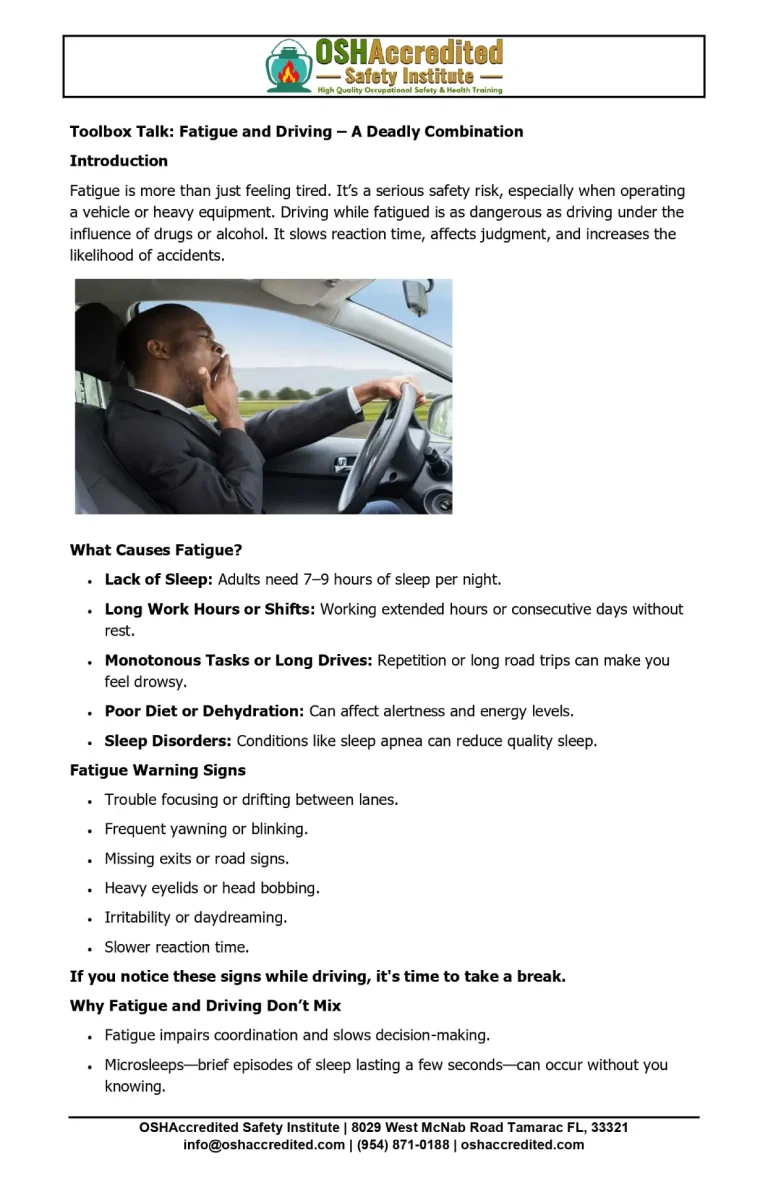
Fatigue is more than just feeling tired. It’s a serious safety risk, especially when operating a vehicle or heavy equipment. Driving while fatigued is as dangerous as driving under the influence of drugs or alcohol. It slows reaction time, affects judgment, and increases the likelihood of accidents.

What Causes Fatigue?
- Lack of Sleep: Adults need 7–9 hours of sleep per night.
- Long Work Hours or Shifts: Working extended hours or consecutive days without rest.
- Monotonous Tasks or Long Drives: Repetition or long road trips can make you feel drowsy.
- Poor Diet or Dehydration: Can affect alertness and energy levels.
- Sleep Disorders: Conditions like sleep apnea can reduce quality sleep.
Fatigue Warning Signs
- Trouble focusing or drifting between lanes.
- Frequent yawning or blinking.
- Missing exits or road signs.
- Heavy eyelids or head bobbing.
- Irritability or daydreaming.
- Slower reaction time.
If you notice these signs while driving, it’s time to take a break.
Why Fatigue and Driving Don’t Mix
- Fatigue impairs coordination and slows decision-making.
- Microsleeps—brief episodes of sleep lasting a few seconds—can occur without you knowing.
- The risk of a crash significantly increases after being awake for 16 hours or more.
- Driving drowsily has similar effects to being legally drunk.
Tips to Prevent Fatigue While Driving
✅ Get at least 7–9 hours of sleep before driving.
✅ Take breaks every 2 hours or 100 miles.
✅ Use the “two-driver” rule for long trips.
✅ Avoid heavy meals before driving.
✅ Stay hydrated—but don’t overdo caffeine (a crash may follow).
✅ Avoid driving during your body’s natural “lows” (midnight–6 a.m. or 1–3 p.m.).
✅ Know your limits—if you’re too tired, don’t drive.
Employer Responsibilities
- Encourage rest periods and breaks.
- Schedule shifts to allow adequate sleep.
- Provide fatigue training to all drivers and equipment operators.
- Avoid assigning excessive overtime or back-to-back night shifts.
Discussion Questions
- Have you ever felt tired while driving? What did you do?
- What policies does our company have to manage fatigue?
- What can you personally do to prevent driving while tired?
Final Thoughts
Fatigue-related crashes are preventable. Being aware, taking proactive steps, and knowing when to rest can save lives—including yours and others on the road.
If you’re tired, don’t drive. It’s that simple.