
Toolbox Talk: Point of Operation Hazards
April 17, 2026 2026-04-23 4:52Toolbox Talk: Point of Operation Hazards
Point of Operation Hazards
Toolbox Talk: Point of Operation Hazards
Reference: OSHA 29 CFR 1910 Subpart O (Machinery and Machine Guarding)
Introduction
Today we are going to talk about point of operation hazards. This is one of the most common causes of serious injuries in the workplace, especially when working with machinery.
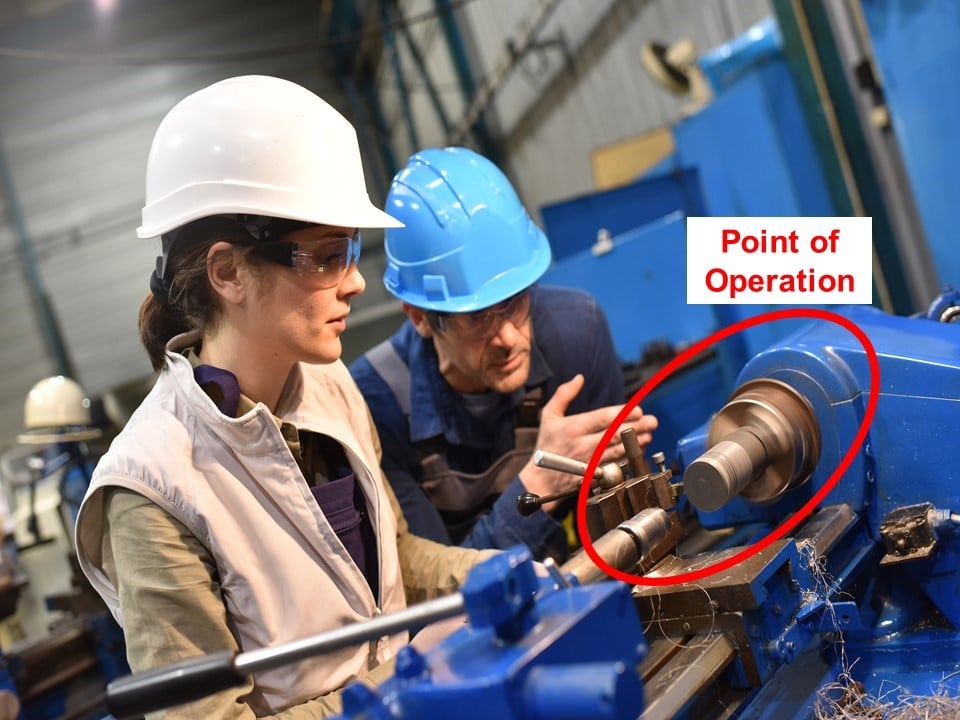
The point of operation is the area on a machine where work is-actually-performed, where cutting, shaping, punching, or forming happens. It’s also where your hands and fingers are most at risk.
Why This Matters
According to OSHA, improper guarding at the point of operation can lead to:
- Amputations
- Crushing injuries
- Lacerations
- Burns
These injuries happen fast and often when someone is distracted, rushing, or bypassing safety controls.
Common Examples of Point of Operation Hazards
You’ll find these hazards on equipment like:
- Saws (table saws, band saws)
- Presses and punch machines
- Rollers and conveyors
- Drills and milling machines
If the machine cuts, bends, shapes, or compresses material—there’s a point of operation hazard.
Key OSHA Requirements (1910 Subpart O)
OSHA requires that:
- The point of operation must be guarded to prevent contact
- Guards must not create additional hazards
- Guards must be secure and durable
- Workers must be trained in safe operations.
Types of Safeguards
Some common protections include:
- Machine guards (fixed, adjustable, or self-adjusting)
- Two-hand controls
- Presence-sensing devices (light curtains)
- Pullbacks or restraints
Never remove or bypass these safeguards, they’re there to protect you.
Safe Work Practices
Here’s what everyone needs to do:
- Keep hands away from moving parts—use tools, not fingers
- Never remove guards unless properly authorized and locked out
- Inspect equipment before use
- Shut down and lock out/tag out before clearing jams or doing maintenance
- Stay focused—most injuries happen when attention slips
- Wear proper PPE (but remember: PPE is your last line of defense)
Red Flags to Watch For
Stop work and report if you see:
- Missing or damaged guards
- Machines that can be reached into easily
- Unusual noises or vibrations
- Someone bypassing safety devices
Discussion / Engagement
Ask the crew:
- “What machines do you use that have point of operation hazards?”
- “Have you ever seen a guard removed or bypassed?”
- “What could go wrong if that guard isn’t in place?”
Closing
Point of operation hazards don’t give second chances. Guards, procedures, and attention to detail are what keep us safe.
If something doesn’t look right, stop and speak up. No job is worth losing a finger or worse.