

Toolbox Talk – Spill Prevention: Two Key Best Practices
January 26, 2026 2026-01-26 5:32Toolbox Talk – Spill Prevention: Two Key Best Practices
Toolbox Talk – Spill Prevention: Two Key Best Practices
Toolbox Talk – Spill Prevention: Two Key Best Practices
Spill prevention isn’t just about keeping the site clean — it’s about protecting the environment, avoiding costly fines, and keeping workers safe and healthy. The best way to avoid a spill? Don’t let it happen in the first place.
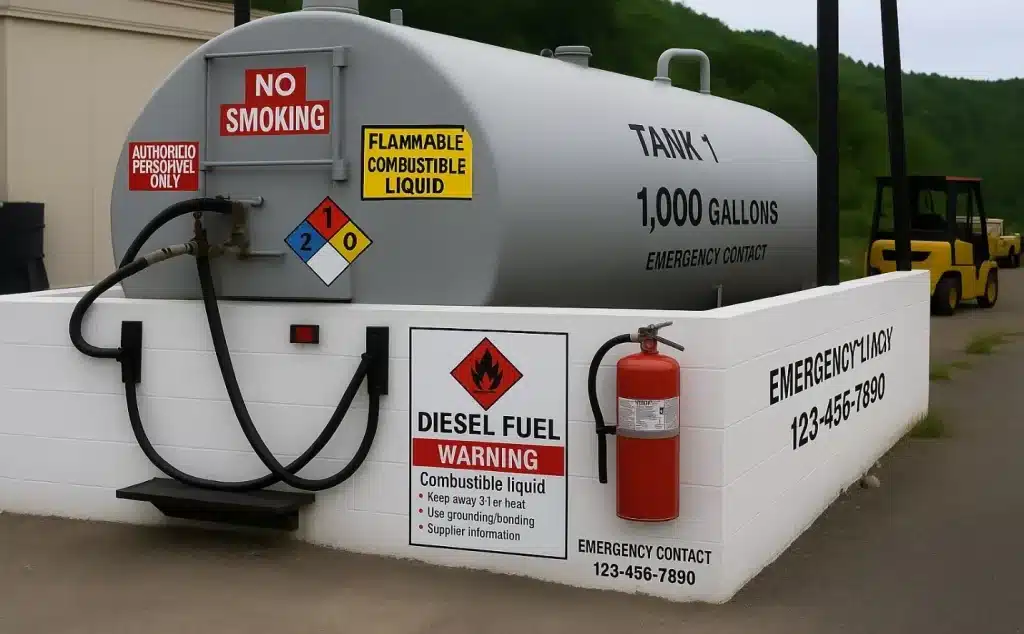
This safety talk focuses on two essential best practices that help reduce the risk of spills and keep your job site safe and compliant.
✅ Best Practice #1: Prepare Before You Start
Preparation is your first line of defense.
Before working with any chemical or hazardous material:
- Review the Safety Data Sheet (SDS). It tells you everything you need to know — how to store it, what PPE to wear, and what to avoid mixing it with.
- Know the risks — and make sure you’re trained. Every worker handling chemical should understand the Hazard Communication Program and be trained in the use of proper PPE.
- Never start a task if you’re unsure about a chemical hazard or if something hasn’t been addressed. Ask questions. Get clarity. Don’t guess.
🛢️ Best Practice #2: Use Secondary Containment
Secondary containment is a simple and effective way to keep spills off the ground and out of the environment.
Here’s what that looks like in practice:
- Store chemical containers, fuel-powered equipment, hoses, and pumps inside a secondary containment area.
- Keep containment systems in good shape:
- Make sure containment walls are properly set up and stable.
- Don’t let hoses rest directly on containment walls — they can collapse the sides and create a leak point.
- Keep backup containments or patch kits nearby in case something goes wrong.
- Never store chemicals that could react dangerously together in the same containment area.
- Have a spill response kit and approved disposal containers nearby — don’t wait until something happens to go looking for them.
🧠 Wrap-Up: Prevention Starts with You
Preventing spills is everyone’s responsibility. With proper preparation, smart storage, and a little attention to detail, most spills can be completely avoided. And if a spill does happen, the right setup ensures it’s contained quickly and safely.
🔁 Always follow your site’s spill prevention policies.
🧼 Keep your work area tidy.
🧯 Be ready with the right tools and training.