Motorcycle Safety in Jamaica | 7 Essential Riding Practices That Can Save Lives
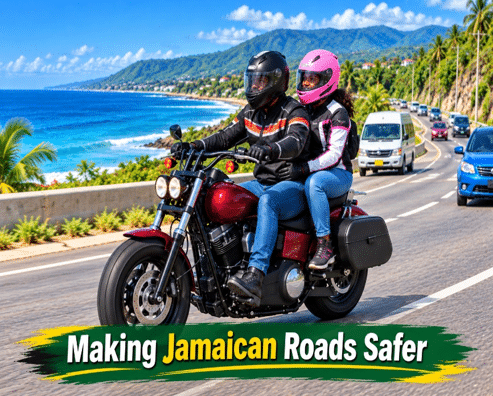

Motorcycle Safety in Jamaica | 7 Essential Riding Practices That Can Save Lives
Introduction.
Motorcycle safety in Jamaica remains a major road safety concern as motorcyclists continue to account for a significant proportion of traffic fatalities. From the busy streets of Kingston and Montego Bay to the winding rural roads of St. Elizabeth, St. Thomas and Portland, motorcycle riders face numerous hazards that require knowledge, preparation and defensive riding skills.Motorcycles provide affordable and convenient transportation for thousands of Jamaicans. However, unlike occupants of enclosed motor vehicles, motorcyclists have limited physical protection during collisions. Developing safe riding habits, recognizing hazards early and making responsible decisions are therefore essential to preventing motorcycle accidents and saving lives.Recognizing the importance of motorcycle safety education, OSHAccredited Safety Institute has developed the online course “Riding a Motorcycle Safely in Jamaica” to strengthen riders’ knowledge, hazard awareness and defensive riding practices.
Motorcycle Accident Statistics in Jamaica.
Motorcycle fatalities remain a serious national concern. According to the Island Traffic Authority (ITA), Jamaica recorded 374 road fatalities in 2025, including 111 motorcyclists, representing approximately 30% of all road deaths.The situation continued to demand attention in 2026. By July 10, the ITA reported 160 road fatalities, including 42 motorcyclists, representing approximately 26% of deaths recorded at that point in the year.These statistics demonstrate the urgent need for effective motorcycle safety training, improved hazard recognition, responsible riding behavior and greater compliance with Jamaica’s road traffic laws.
- Maintain a Minimum Three-Second Following Distance.
Maintaining an adequate following distance is one of the most important defensive riding practices.Motorcyclists should maintain at least a three-second followingdistance behind the vehicle ahead under favorable road and weather conditions.To measure this distance, select a stationary roadside object, such as a utility pole or road sign. When the vehicle ahead passes the object, count three seconds. If your motorcycle reaches the same object before completing the count, increase your following distance.Riders should allow additional following time during heavy rain, reduced visibility, poor road conditions or when travelling behind large vehicles.A safe following distance provides more time to recognize hazards, respond to sudden braking and avoid collisions.
- Look 12–15 Seconds Ahead.
Effective motorcycle riding requires more than watching the vehicle immediately ahead.Motorcyclists should develop the habit of scanning approximately 12–15 seconds ahead, whenever visibility permits, to identify developing hazards before reaching them.This forward-looking technique helps riders recognize intersections, pedestrians, potholes, stopped vehicles, approaching curves and other potential dangers.For example, when approaching a busy intersection in Spanish Town, a rider scanning well ahead may notice a vehicle preparing to turn across the motorcycle’s path.Early hazard recognition allows the rider to adjust speed, improve road positioning and prepare an appropriate response.
- Recognize Potholes and Dangerous Road Surfaces.
Potholes represent a significant hazard for motorcycle riders throughout Jamaica, particularly on poorly maintained rural roads and following periods of heavy rainfall.Unlike larger vehicles, motorcycles can lose stability when their wheels strike deep potholes, loose gravel or damaged road surfaces.Riders should continuously scan the roadway, reduce speed when-approaching damaged sections and avoid sudden steering movements.When encountering a pothole, assess surrounding traffic before selecting a safer path. Never swerve abruptly into an opposing traffic lane to avoid a road defect.During heavy rainfall, exercise additional caution because standing water may conceal deep potholes and other dangerous surface conditions.
- Approach Intersections with Increased Caution.
Intersections are particularly dangerous because vehicles, pedestrians and motorcycles may approach from several directions.Motorcyclists should reduce speed, when necessary, observe traffic signals, check for turning vehicles and anticipate motorists who may fail to recognize an approaching motorcycle.At uncontrolled intersections, riders must exercise particular-caution and follow applicable right-of-way requirements.A useful defensive riding practice is to wait approximately two seconds after a traffic signal changes to green, when safe and appropriate, while checking that conflicting traffic has stopped.This recommended safety practice is not a substitute for obeying traffic signals or yielding when required.
- Watch for Stray Animals on Jamaican Roads.
Stray and wandering animals create unpredictable hazards, especially in Jamaica’s rural communities.Motorcyclists may encounter goats, cows, horses, dogs and donkeys entering or crossing roadways without warning.For example, a rider travelling through rural St. Elizabeth may encounter goats near the roadside, while larger animals such as cows, horses or donkeys may obstruct narrow country roads.Riders should reduce speed immediately when animals are observed, maintain sufficient stopping distance and avoid aggressive swerving.Animals can move unexpectedly. Therefore, riders should remain alert, cover the brakes when appropriate and be prepared to stop safely.
- Avoid Speeding and Excessive Speed.
Speeding is a major contributor to serious road crashes in Jamaica.As motorcycle speed increases, riders have less time to recognize hazards and require greater distance to stop.Excessive speed also increases the severity of injuries when collisions occur.Motorcyclists should obey posted speed limits and adjust their speed according to traffic, weather, road surface conditions and available visibility.Particular-caution- s necessary when approaching schools, pedestrian crossings, sharp bends, residential communities and busy commercial areas.Remember that a posted speed limit represents a legal maximum under applicable conditions, not a guarantee that travelling at that speed is always safe.
- Avoid Poor Overtaking and Dangerous Weaving.
Improper overtaking places motorcyclists and other road users at serious risk.Riders should never overtake when approaching blind curves, hill crests, pedestrian crossings or locations where visibility and available road space are inadequate.Before overtaking, assess the roadway ahead, check mirrors and blind spots, signal appropriately and ensure the maneuver is permitted and can be completed safely.Avoid weaving between vehicles, overtaking multiple vehicles without adequate visibility or entering the opposing traffic lane without sufficient clearance.Patience, sound judgement and responsible road positioning are essential to prevent overtaking-related collisions.
Strengthening Motorcycle Safety Through Education.
Reducing motorcycle accidents in Jamaica requires a combination of responsible riding, effective law enforcement, improved road conditions and accessible motorcycle safety education.
The “Riding a Motorcycle Safely in Jamaica” course, developed by OSHAccredited Safety Institute, provides structured online motorcycle safety training covering defensive riding, hazard recognition, protective equipment, motorcycle control, high-risk behaviors and emergency preparedness.The six-hour, self-paced program is designed to complement practical motorcycle training by helping riders develop essential safety knowledge before applying these principles on the road.Motorcycle safety is everyone’s responsibility. Through education, awareness and responsible riding practices, we can reduce preventable crashes, protect vulnerable road users and save lives.
OSHAccredited Safety Institute — Making Jamaican Roads Safer.
Explore the motorcycle safety course:https://oshaccredited.com/courses/
Author: Dr. O’Neil G. Blake, Chief Executive Officer (CEO) of OSHAccredited Safety Institute
Credentials: MS., MBA., MSc., BSc, CSP., ASP., CSHM., CSMP., MRSA.