

How Can Road Safety Education in Jamaica Be Addressed with Defensive Driving Training DDT 6.0 Jamaica Course?
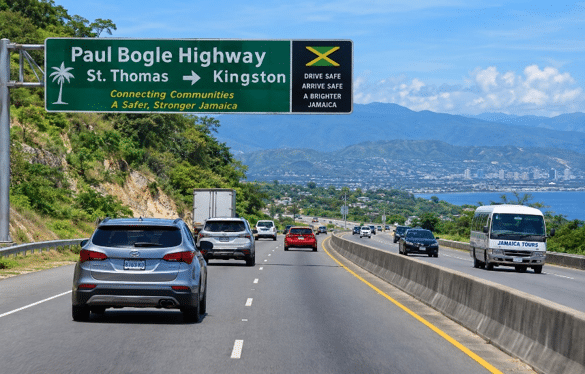

How Can Road Safety Education in Jamaica Be Addressed with Defensive Driving Training DDT 6.0 Jamaica Course?
Road safety remains an important public-safety and transportation issue in Jamaica. Every day, thousands of Jamaicans travel by private motor vehicle, taxi, commercial vehicle, motorcycle, bus, bicycle, or on foot. Improving driver knowledge, hazard recognition, decision-making, and defensive driving behavior can therefore play an important role in reducing road crashes, injuries, and fatalities.
The OSHAccredited Safety Institute Defensive Driving Training DDT 6.0 Jamaica course provides structured online road-safety education designed to help drivers recognize hazards, manage driving risks, and make safer decisions on Jamaican roads.
What Is Road Safety?
Road safety refers to the principles, practices, laws, systems, and behaviors intended to prevent road traffic crashes and reduce deaths and injuries when crashes occur. It involves much more than simply knowing how to operate a motor vehicle. Effective road safety requires responsible behavior, hazard awareness, proper vehicle maintenance, speed management, safe following distances, seat-belt use, attention to pedestrians and motorcyclists, and sound decision-making.
The World Health Organization reports that approximately 1.16 million people die globallyeach year from road traffic crashes, while millions more sustain non-fatal injuries. Road traffic injuries are also the leading cause of death globally among children and young adults ages 5–29. These statistics demonstrate why effective road-safety education remains so important.
Road Safety in Jamaica.
Jamaica continues to experience a significant road-fatality burden. According to Jamaican government information, 365 people lost their lives in road crashes in 2024. The toll increased to 374 deaths in 2025. In 2026, Jamaican authorities established a goal of reducing annual road fatalities to fewer than 300.
There have been encouraging signs. Island Traffic Authority figures reported that, as of July 1, 2026, Jamaica had recorded 146 road deaths from 131 fatal crashes, representing a 22 percent decline in fatalities compared with the corresponding period in 2025. However, vulnerable road users remained heavily represented: pedestrians and motorcyclists each accounted for 37 deaths at that point.
These numbers reinforce an important message: road safety requires both effective enforcement and continuous driver education.
Defensive Driving in Kingston and Montego Bay.
Driving in Kingston requires drivers to manage dense traffic, intersections, pedestrians, public transportation vehicles, motorcycles, lane changes, and frequent stopping and starting. Defensive drivers must continuously scan the roadway, maintain adequate space, anticipate the actions of other motorists, and avoid distractions.
Montego Bay presents its own challenges. Local-residents, commercial drivers, taxis, visitors, pedestrians, and tourism-related traffic frequently share busy roadways. Drivers should avoid aggressive maneuvers and remain alert for sudden stops, pedestrians, motorcycles, vehicles entering the roadway, and changing traffic conditions.
In both cities, defensive driving means anticipating hazards before they develop into emergencies.
Driving Safely on Jamaica’s Highways.
Highway driving can create a false sense of security. Higher speeds mean drivers travel greater distances before they can recognize a hazard, react, and bring their vehicles to a controlled stop.
Roadways such as the Nelson Mandela Highway, Bustamante Highway, and major corridorsconnecting Jamaican communities require drivers to manage speed, following distance, overtaking, merging traffic, and changing roadway conditions. Jamaican authorities have previously identified several major roads among crash hotspots, reinforcing the importance of defensive-driving techniques on both urban and highway routes.
Poor Overtaking Can Have Serious Consequences.
Poor overtaking is one of the dangerous decisions a driver can make. Attempting to pass without adequate visibility, sufficient roadway distance, or enough time to return safely to the proper lane can expose the driver and other road users to a high-energy collision.
Before overtaking, drivers should evaluate whether the maneuver is legal, necessary, and safe. Never overtake where visibility is restricted by curves, hills, intersections, oncoming traffic, or other hazards. Defensive driving is not about arriving first; it is about arriving safely.
Speeding Reduces the Margin for Error.
Speed affects both the likelihood and severity of crashes. As vehicle speed increases, drivers have less time to identify hazards and respond effectively. The distance required to stop also increases, while the forces involved in a collision become greater.
A defensive driver selects a speed appropriate not only for the posted limit but also for traffic, weather, visibility, pedestrians, road conditions, and other hazards. A posted speed limit should never be interpreted as a requirement to maintain that speed when conditions make doing so unsafe.
Maintain a Safe Following Distance.
Following distance provides drivers with valuable time to observe, evaluate, decide, and respond to changing traffic conditions.
The DDT 6.0 Jamaica course teaches drivers to maintain at least a three-second followingdistance for cars under normal conditions. Commercial vehicle drivers should maintain at least a four-second following distance in towns and residential areas and approximately seven to ten seconds on highways.
These distances should be increased when conditions deteriorate because of rain, poor visibility, heavy traffic, slippery roads, vehicle limitations, or other hazards. Space management is one of defensive driver’s most valuable safety resources.
Fatigue Management Saves Lives.
Fatigue can reduce concentration, slow reaction time, impair judgment, and increase the possibility of a driver making a serious mistake.
The DDT 6.0 Jamaica course emphasizes proactive fatigue management. Drivers should be properly rested before beginning a journey and should recognize warning signs such as repeated yawning, difficulty concentrating, heavy eyelids, lane drifting, or difficulty remembering recently travelled sections of roadway.
As a defensive-driving practice, drivers should take approximately a 15-to-20-minute breakafter every two hours of driving. A short break can provide an opportunity to get out of the vehicle, stretch, refresh, and reassess whether the driver is sufficiently alert to continue safely.
IACDE-Accredited Online Safety Education.
OSHAccredited Safety Institute is a fully accredited institution with the International Accrediting Commission for Digital Education (IACDE). IACDE’s public institutional directory identifies OSHAccredited Safety Institute as a Fully Accredited Institution. IACDE is an independent, private accreditation and quality-assurance organization for digital and technology-enhanced education.
Institutional accreditation supports OSHAccredited Safety Institute’s commitment to structured course development, instructional quality, assessment, learner support, digital delivery, and continuous improvement.
DDT 6.0 Jamaica: Education for Safer Roads.
The Defensive Driving Training DDT 6.0 Jamaica course is designed to strengthen driver education by moving beyond simply knowing traffic rules. It focuses on developing the knowledge and defensive-driving mindset needed to recognize hazards, anticipate dangerous situations, manage space and speed, and make responsible decisions behind the wheel.
No single course can eliminate road crashes. Road safety requires a broader combination of responsible drivers, effective laws and enforcement, safer roads, safer vehicles, public education, and protection for vulnerable road users. However, quality defensive-driving education can make an important contribution by helping drivers understand how their everyday decisions affect themselves, their passengers, pedestrians, motorcyclists, cyclists, and other road users.
The United Nations Decade of Action for Road Safety 2021–2030 has established a global goal of reducing road traffic deaths and injuries by 50 percent by 2030. Jamaica’s efforts to reduce road fatalities can be strengthened through sustained enforcement, safer infrastructure, public awareness, and high-quality driver education.
Through Defensive Driving Training DDT 6.0 Jamaica, OSHAccredited Safety Institute seeks to contribute to that effort by promoting safer driving knowledge, stronger hazard awareness, and responsible decision-makinghelping to make Jamaica’s roads safer, one driver at a time.
Author: Dr. O’Neil G. Blake, Chief Executive Officer (CEO) of OSHAccredited Safety Institute
Credentials: MS., MBA., MSc., BSc, CSP., ASP., CSHM., CSMP., MRSA.