
Using Online Safety Training to Strengthen Workplace Safety and Health Programs


Using Online Safety Training to Strengthen Workplace Safety and Health Programs
An effective safety and health program protects employees, reduces injuries and illnesses, improves productivity, and helps organizations comply with legal and ethical responsibilities. The following framework integrates the Plan–Do–Check–Act (PDCA) continuous improvement cycle to help organizations develop, implement, evaluate, and continually strengthen their workplace safety and health program. This framework is an important concept in ISO 45001.
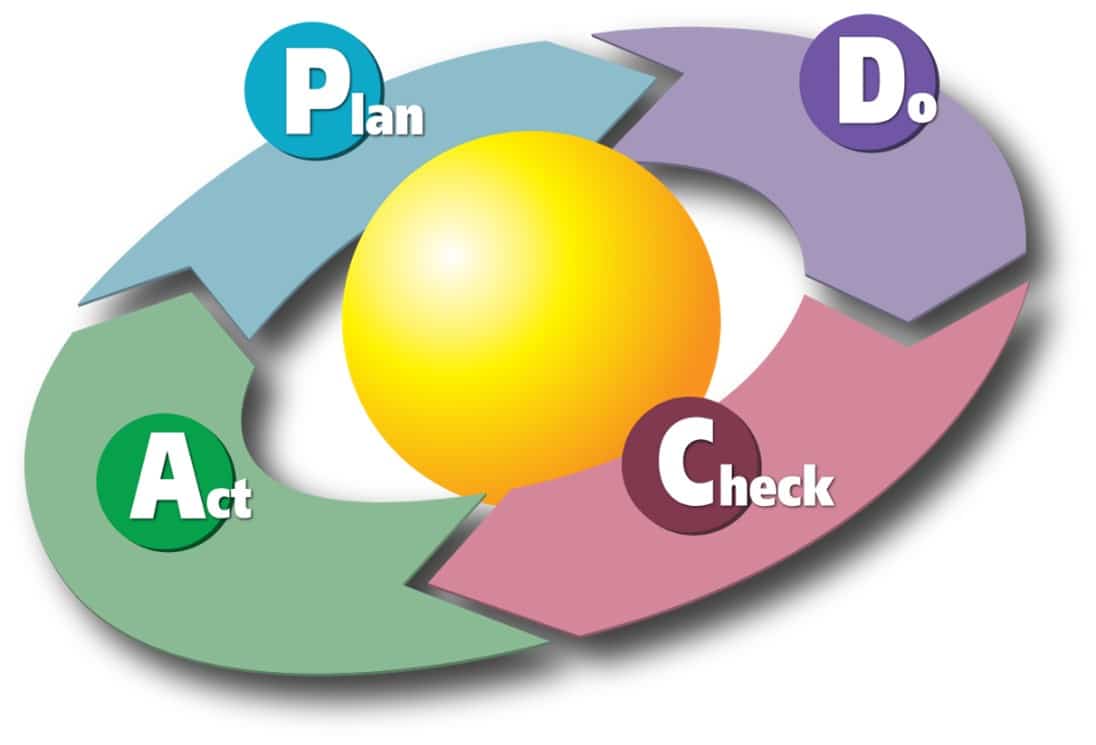
PDCA framework for continuous improvement
PLAN – Establish the Foundation
- Management Leadership and Commitment
A successful program begins with visible and consistent leadership commitment. Senior management should establish safety and health as a core organizational value, not just a regulatory requirement. This includes setting clear expectations, allocating adequate resources (time, budget, and personnel), and holding leaders accountable for safety performance. A written safety and health policy should communicate management’s commitment and define roles and responsibilities at all levels.
- Employee Participation
Employees play a critical role in identifying hazards and improving safety practices. Encourage active employee involvement through safety committees, regular meetings, and open reporting systems. Workers should feel empowered to report hazards, near misses, and injuries without fear of retaliation. Engaging employees builds ownership, improves hazard awareness, and increases the effectiveness of the program.
- Hazard Identification and Assessment
Systematically identify workplace hazards before they cause harm. This includes conducting regular inspections, job hazard analyses, and reviewing injury and illness records. Consider physical, chemical, biological, ergonomic, and psychosocial hazards. Assess the severity and likelihood of each hazard to prioritize corrective actions.
DO – Implement the Program
- Hazard Prevention and Control
Once hazards are identified, implement effective controls to eliminate or reduce risks. Use the hierarchy of controls as a guide: eliminate hazards where possible, substitute safer alternatives, apply engineering controls, implement administrative controls, and provide appropriate personal protective equipment (PPE). Controls should be implemented promptly and maintained to ensure effectiveness.
- Education and Training
Provide employees with training that is relevant to their job tasks and workplace hazards. Training should cover hazard recognition, safe work procedures, emergency response, and proper use of equipment and PPE. Supervisors should receive additional training in enforcing safety rules and leading by example. Training should be ongoing, documented, and updated as conditions or processes change.
- Communication and Documentation
Clear communication ensures that safety expectations are understood and followed. Maintain written procedures, policies, and records related to training, inspections, incidents, and corrective actions. Share safety information through meetings, signage, and digital platforms. Transparent communication supports consistent implementation of the safety program.
CHECK – Measure and Evaluate
- Program Evaluation and Performance Monitoring
Regularly evaluate the safety and health program to measure its effectiveness. Review leading and lagging indicators such as inspections, audits, injury trends, near-miss reports, and employee feedback. Verify that controls are functioning as intended and that employees are following established procedures.
ACT – Improve and Sustain
- Corrective Action and Continuous Improvement
Use evaluation results, incident investigations, and employee input to identify gaps and root causes. Implement corrective and preventive actions to address deficiencies. Update policies, procedures, controls, and training as needed. Leadership should reinforce accountability and recognize improvements, ensuring lessons learned are integrated into daily operations.
ISO 45001
ISO 45001 is an international standard that provides a structured framework for managing occupational health and safety to prevent work-related injuries and illnesses. It helps organizations identify hazards, assess risks, and implement controls to improve workplace safety and health performance. ISO 45001 is based on the Plan–Do–Check–Act (PDCA) cycle to ensure systematic and continual improvement. In the Plan phase, organizations set OH&S objectives and identify risks; in the Do phase, they implement safety controls and training; in the Check phase, they monitor performance and audit results; and in the Act phase, they take corrective actions to improve the system. By integrating the PDCA cycle into ISO 45001, organizations can systematically strengthen their workplace safety and health program, proactively manage risks, and achieve continual improvement in OH&S performance.
Conclusion
ISO 45001 provides an internationally recognized framework for systematically managing occupational health and safety, with the goal of preventing work-related injuries and illnesses. Through the application of the Plan–Do–Check–Act (PDCA) cycle, organizations can go beyond basic compliance and establish a proactive, continuously improving safety and health program. Strong leadership commitment, active employee involvement, effective risk controls, and ongoing performance evaluation collectively contribute to a safer, healthier, and more productive workplace.
Author: Dr. O’Neil G. Blake, Chief Executive Officer (CEO) of OSHAccredited Safety Institute
MS., MBA., MSc., BSc, CSP., ASP., CSHM., CSMP., MRSA.
Date: 05-29-2026