
Hurricanes, Risk, and Recovery: Advancing Preparedness Strategies for Sustainable Development in Jamaica

Hurricanes, Risk, and Recovery: Advancing Preparedness Strategies for Sustainable Development in Jamaica
Hurricanes and Tropical Systems: Conceptual Foundations
Hurricane risk management in Jamaica must be conceptualized within a multi-hazard, systems-based framework that integrates meteorological science with disaster risk reduction (DRR) doctrine. Hurricanes are high-impact hydro-meteorological events characterized by sustained winds exceeding 119 km/h, but their most consequential effects arise from compound hazards storm surge, inland flooding, and landslides. These cascading threats interact with Jamaica’s steep topography and fragile watersheds, producing systemic disruptions across critical lifeline infrastructure. Consequently, preparedness strategies must align with all-hazards planning and emphasize anticipatory risk governance.
Jamaica’s Vulnerability and the Caribbean Context
Jamaica’s vulnerability profile reflects the convergence of geographic exposure, socio-economic constraints, and environmental degradation. Coastal concentration of population and infrastructure, coupled with informal settlement expansion, amplifies hazard exposure. Across Caribbean small island developing states (SIDS), constrained fiscal space and limited economic diversification impede adaptive capacity. Climate change exacerbates these dynamics by intensifying storm systems and elevating baseline risk. Accordingly, resilience must be mainstreamed into national development policy through risk-informed land-use planning and climate adaptation strategies.
Implications for Vulnerable Populations
Disaster risk is disproportionately borne by socially vulnerable populations, including the elderly, people with disabilities, children, and low-income households. These groups face structural and systemic barriers to evacuation, shelter access, and recovery resources. Effective emergency management requires the integration of Functional Needs Support Services (FNSS), inclusive sheltering protocols, and targeted risk communication strategies. Strengthening social protection systems and community-based preparedness enhances equity and reduces disaster-induced disparities.
Economic and Sectoral Impacts
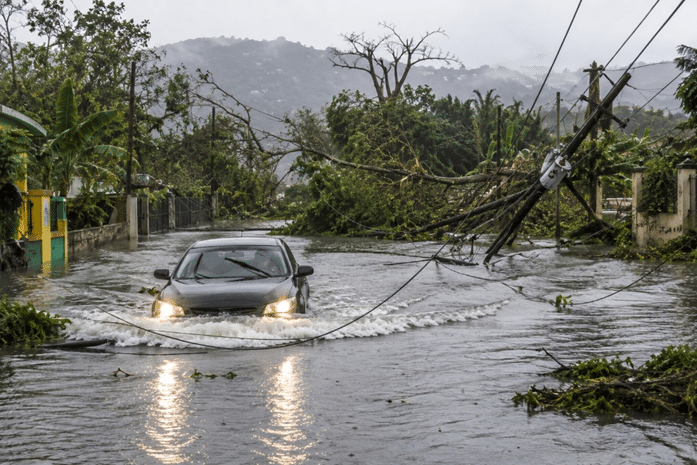
Hurricane events in Jamaica generate significant macroeconomic disruption and long-term recovery burdens. The 2025 event, Hurricane Melissa, affected approximately 1.6 million people and resulted in estimated losses of US$8.8 billion, equivalent to roughly 56% of national GDP. Physical damage alone was assessed at US$8.8 billion, or approximately 41% of GDP, marking it as the most catastrophic disaster in Jamaica’s recorded history. The agricultural sector experienced widespread devastation, with approximately 41,390 hectares of farmland impacted and over 70,000 farmers affected. Additionally, livestock losses exceeded 1.25 million animals, while the coffee industry recorded a 40% loss of trees and a 45% decline in production valued at over US$833 million.
Tourism, contributing nearly 30% of GDP, suffered severe disruption due to damage to more than 150,000 homes and tourism-related facilities. Critical infrastructure failures including transportation networks and utilities further constrained response operations and economic recovery. The health sector experienced surge demand amid damaged facilities and heightened risks of waterborne and vector-borne diseases. These cascading impacts underscore the necessity of integrating disaster risk financing, contingency planning, and sectoral resilience into national economic frameworks.
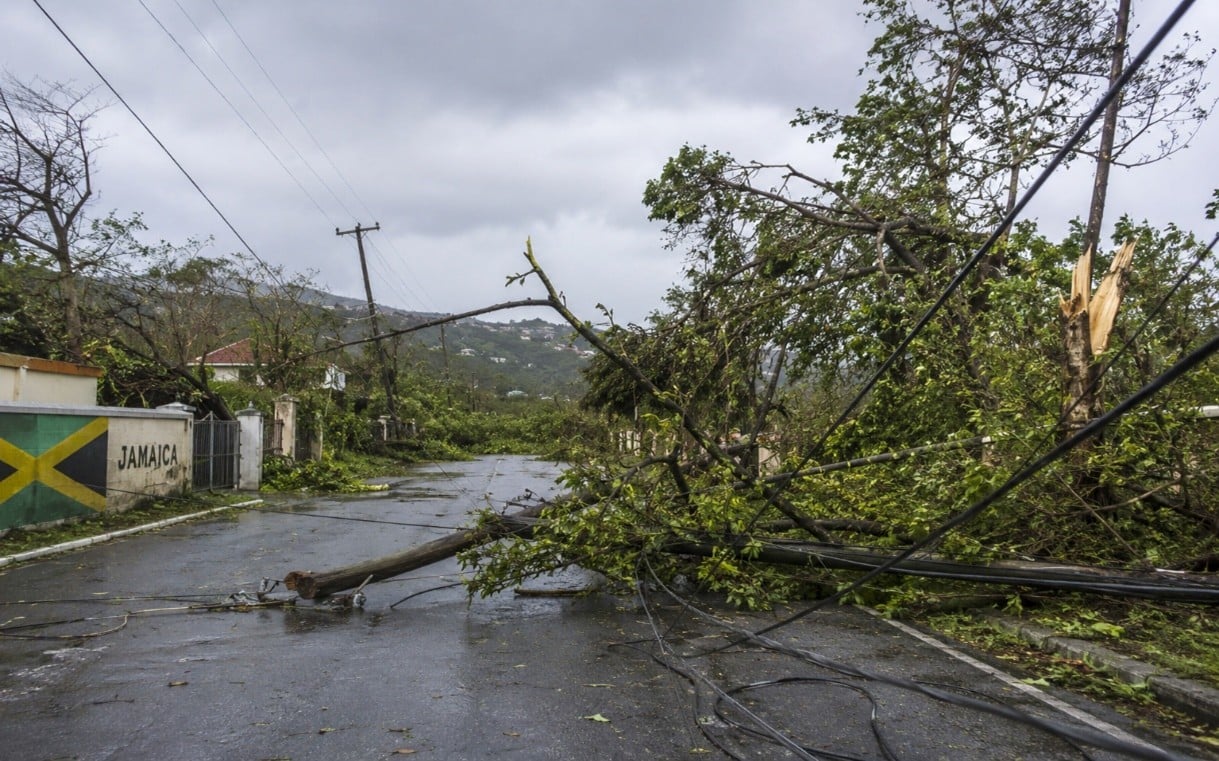
Post hurricane Melissa damage
Institutional Framework: Office of Disaster Preparedness and Emergency Management
Jamaica’s disaster risk management architecture is led by the Office of Disaster Preparedness and Emergency Management (ODPEM), which coordinates preparedness, response, and recovery operations. Its mandate reflects a comprehensive approach to DRM, though capacity enhancement, resource allocation, and community-level integration remain priorities. Strengthening decentralized coordination and interoperability across agencies is essential for effective incident management.
Lessons from the Federal Emergency Management Agency
The Federal Emergency Management Agency provides a robust model for structured disaster governance through frameworks such as the Incident Command System (ICS) and Community Emergency Response Teams (CERT). Adaptation of these models within Jamaica requires contextualization, emphasizing scalability, community engagement, and institutional alignment. Data-driven decision-making and inter-agency coordination are critical enablers of operational efficiency.
Individual and Organizational Preparedness
Individual preparedness constitutes the foundation of national resilience and must be institutionalized as a sustained behavioral practice. Households should maintain emergency supply kits with water reserves of at least one gallon per person per day for three to seven days, alongside non-perishable food, medical supplies, and critical documentation. Evacuation readiness requires knowledge of hazard zones, shelter locations, and redundant communication mechanisms.
Preparedness must be inclusive, incorporating provisions for vulnerable populations to ensure continuity of care and equitable protection. Structural mitigation measures such as reinforcing roofing systems, securing windows, and maintaining drainage networks represent cost-effective risk reduction strategies that significantly decrease hazard exposure.
At the organizational level, Business Continuity Planning (BCP) and Continuity of Operations Planning (COOP) are essential components of operational resilience. These frameworks require comprehensive risk assessments, identification of critical functions, and implementation of redundancy systems for data, supply chains, and communications. Regular simulation exercises, scenario-based training, and after-action reviews enhance readiness and adaptive capacity. Collaboration with agencies such as the Office of Disaster Preparedness and Emergency Management strengthens coordination and resource integration.
Building Resilience
Building resilience in Jamaica requires a deliberate focus on building critical infrastructure including roads, bridges, the electricity grid, water systems, and communication networks that can withstand, absorb, and rapidly recover from hurricane impacts. For Jamaica, this requires integrating disaster risk reduction into national development strategies and investing in resilient infrastructure.
Energy resilience is critical. Expanding renewable energy sources such as solar and wind can reduce dependence on centralized systems vulnerable to storm damage. Strengthening the national electrical grid enhances reliability and recovery.
The health sector must be fortified through resilient infrastructure and emergency preparedness systems. Improved drainage systems are essential to reduce flooding, while enhanced potable water distribution and storage systems ensure access to safe water post-disaster.
Agricultural resilience can be strengthened by promoting the cultivation of vegetables and root crops that are more resistant to extreme weather. Climate-smart agricultural practices are essential for food security.
Effective communication and public engagement are vital. Leveraging the Jamaica Information Service (JIS), social media, NGOs, civic organizations, Jamaica Agricultural Society (JAS), and faith-based groups enhances information dissemination and community mobilization.
Prepositioning mobile fuel stations and mobile food distribution systems improves emergency response capabilities. Strengthening building codes and zoning laws reduces structural vulnerability and limits development in high-risk areas.
Resilience also requires social cohesion. Strengthening community networks, enhancing education, and promoting inclusive planning improve adaptive capacity. Financial instruments, including insurance and regional risk pooling, provide additional safeguards.
Conclusion
Hurricane preparedness in Jamaica must be embedded within a proactive, risk-informed governance framework that prioritizes resilience and sustainability. Strengthening institutional systems through the Office of Disaster Preparedness and Emergency Management, adapting best practices from the Federal Emergency Management Agency, and institutionalizing preparedness at individual and organizational levels are critical pathways to resilience.
Preparedness is not merely a defensive mechanism but a strategic investment in national stability, economic continuity, and human security in an era of escalating climate risk.
Author: Dr. O’Neil G. Blake, Chief Executive Officer (CEO) of OSHAccredited Safety Institute
MS., MBA., MSc., BSc, CSP., ASP., CSHM., CSMP., MRSA.
Date: 06-01-2026