
Practical Defensive Driving Skills for Kenyan Roads: Defensive Driving Training DDT-6.0 Kenya.

Practical Defensive Driving Skills for Kenyan Roads: Defensive Driving Training DDT-6.0 Kenya.
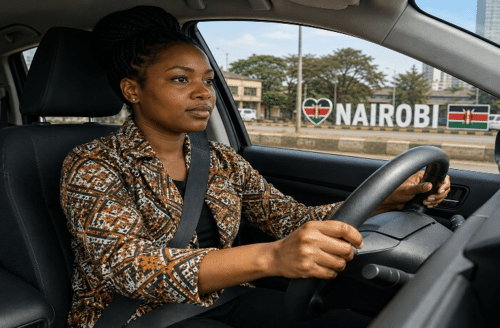
Road safety in Kenya requires more than knowing how to operate a vehicle. Every journey demand awareness, sound judgement and the ability to anticipate hazards before they become emergencies. From busy Nairobi streets filled with matatus and boda Bodas to long rural highways connecting counties and towns, drivers face constantly changing road conditions.
The OSH Accredited Safety Institute Defensive Driving Training DDT-6.0 Kenya course provides an important foundation for developing safer driving habits. Defensive driving focuses on hazard awareness, appropriate speed, safe following distances, anticipation, concentration and responsible decision-making.
For Kenyan motorists, professional defensive driving training is particularly valuable because driving environments can change dramatically within a single journey.
Defensive Driving on Kenyan Roads
Defensive driving means actively looking for potential hazards rather than assuming other road users will always make the correct decision. A defensive driver watches vehicles ahead, checks mirrors regularly, anticipates pedestrians and motorcycles, and maintains enough space to respond when something unexpected happens.
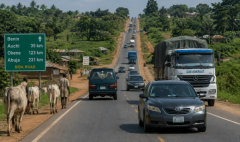
This is especially important in Kenya, where a driver may encounter matatus stopping to pick up or drop off passengers, boda Bodas filtering through traffic, pedestrians crossing unexpectedly, livestock near rural roads, overloaded vehicles, slow-moving trucks and changing weather conditions.
Kenya’s official driver-training curriculum emphasizes the driver’s responsibility to observe, decide and act, with disciplined road behavior and hazard awareness forming a foundation for defensive driving.
Defensive Driving on Rural Highways in Kenya
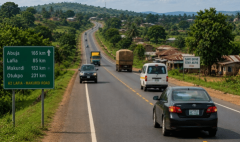
Rural highways can appear easier to drive on because traffic may be lighter than in Nairobi or other major urban centers. However, open roads can encourage speeding and complacency.
Examples include the Nairobi–Nakuru Highway, Nairobi–Mombasa Highway, Nairobi–Nyeri Highway, Nairobi–Meru Highway, Nairobi–Kisumu Highway and Eldoret–KitaleRoad. These routes pass through different settlements, trading centers, bends, hills, pedestrian areas and junctions.
On rural highways, defensive drivers should constantly scan far ahead. A bend may conceal a stopped truck, a pedestrian may be walking along the carriageway, or a boda Bodas may enter the road from a minor access road.
Overtaking deserves-particular caution. A driver should never overtake simply because another vehicle is travelling slowly. Visibility, road markings, oncoming traffic, intersections, hills and bends must all be considered before making the maneuver.
Night driving requires even greater caution. Headlights can reduce visibility of pedestrians, cyclists and animals outside the main beam, while oncoming headlights may temporarily affect a driver’s vision.
The Three-Second Following Distance for Cars
Maintaining space between vehicles is one of the simplest and most effective defensive-driving techniques.
For cars, the three-second following distance is a useful defensive-driving practice under normal conditions. Choose a fixed roadside object. When the vehicle ahead passes it, count three seconds before your own vehicle reaches the same point.
The gap should be increased in rain, darkness, dust, poor visibility, heavy traffic or on slippery roads.
Three seconds gives a driver more time to identify brake lights, react to sudden stops and control the vehicle without making an emergency maneuver.
Four Seconds for Commercial Vehicles in Towns and Residential Areas
Commercial vehicles require greater space because their size, weight and braking characteristics can affect stopping distances.
In towns and residential areas, commercial vehicle drivers should maintain a four-second following distance under normal conditions. This is particularly important around busy junctions, markets, pedestrian crossings and residential estates.
A commercial driver may also be following a matatu that suddenly stops for passengers. Leaving additional space gives the driver more time to respond instead of braking aggressively or swerving into another lane.
Residential areas require extra caution because children, pedestrians, cyclists and boda Bodas riders can appear suddenly from driveways, side roads or between parked vehicles.
Seven to Ten Seconds for Commercial Vehicles on Highways
For commercial vehicles travelling on highways, a seven-to-ten-second following distance provides a substantially larger safety margin.
This is particularly useful for trucks, buses and other heavy vehicles travelling on routes such as the Nairobi–Mombasa Highway or Nairobi–Nakuru Highway.
A heavy vehicle needs adequate time to respond to sudden braking, road obstructions and changes in traffic flow. Maintaining a larger gap also improves forward visibility because the driver can see beyond the vehicle immediately ahead.
The seven-to-ten-second distance should be increased further when travelling downhill, carrying a heavy load, driving in rain, encountering dust or operating in poor visibility.
These following-distance recommendations are defensive-driving practices, not a replacement for complying with Kenya’s applicable traffic laws and posted signs.
Matatus and Boda Bodas: Anticipate, Don’t Compete
Kenyan roads have a unique mix of road users. Matatus are an essential part of public transportation, while boda Bodas provide flexible transport across urban, rural and peri-urban areas.
Defensive driving means anticipating their movements rather than competing for road space.
A matatu may slow or stop near a passenger stage. A boda Bodas may move around stationary traffic or approach from a side road. Instead of reacting aggressively, a defensive driver maintains a safe speed, checks mirrors and leaves sufficient space.
Drivers should never assume that another road user has seen them. Making eye contact where possible, using indicators correctly and maintaining a predictable position can reduce misunderstandings.
Cellphone Use and Distracted Driving
A cellphone can turn a routine journey into a serious risk. Texting, answering calls, reading notifications, adjusting applications or manually operating navigation takes attention away from driving.
Kenya’s traffic framework restricts the use of mobile phones and other communication equipment in circumstances where they distract, or are likely to distract, a driver.
Defensive drivers should set navigation, adjust mirrors, select music and secure belongings before moving. If a phone needs attention, the safest approach is to stop at an appropriate and safe location.
Distraction is not limited to phones. Eating, grooming, looking for objects, talking to passengers or becoming absorbed in roadside activity can also reduce concentration.
Speeding and Defensive Driving in Kenya
Speed is one of the most important factors under a driver’s control. The faster a vehicle travels, the less time the driver has to identify and respond to hazards, and the greater the potential consequences of a collision.
Kenya’s Traffic (Speed Limits) Rules specify maximum speeds for different classes of vehicles. The current rules list 100 km/h for motor cars on single-carriageway highways and 80 km/h for commercial vehicles, matatus and public service vehicles. Drivers must also obey lower posted limits and adjust speed to actual road and traffic conditions.
Defensive driving therefore means more than simply asking, “Am I below the speed limit?” The better question is, “Is my speed appropriate for what I can safely see and control?”
Rain, fog, darkness, pedestrians, animals, potholes and heavy traffic may require a driver to travel considerably slower.
Driving Safely in Kenyan School Zones
School areas demand heightened attention because children can behave unpredictably and may cross roads without accurately judging approaching traffic.
Drivers should slow down when approaching schools, obey signs and road markings, watch for crossing guards, school buses and pedestrians, and be prepared to stop.
Examples of locations where motorists should exercise-particular caution include roads around Aga-Khan Academy/School along Waiyaki Way in Nairobi, school areas along Ngong Road, and the Thika Road/Kahawa Sukari area around schools such as Thika RoadAcademy. These examples are not intended to imply that every section has a formally designated school-zone speed restriction; motorists should follow the actual signs and traffic controls at the location.
The Aga Khan School site along Waiyaki Way, for example, is associated with traffic activity during school arrival and departure periods. Thika Road Academy is located-in Kahawa Sukari, opposite Kenyatta University, making awareness of school-related pedestrian activity particularly relevant for drivers in that area.
Kenya has also introduced the Traffic (School Transport) Rules, 2026, which establish requirements concerning school transport providers, school vehicles, drivers, attendants and safety procedures.
Why Defensive Driving Training Matters
The OSH Accredited Safety Institute Defensive Driving Training DDT-6.0 Kenya course can help drivers turn road-safety principles into practical habits.
For businesses operating fleets, professional drivers and organizations with employees who drive for work, defensive driving training can reinforce safer behaviors such as maintaining appropriate following distances, controlling speed, managing distractions and anticipating vulnerable road users.The goal is not merely to respond better after a hazard appears. It is to identify the hazard early enough to avoid the emergency altogether.
Conclusion
Defensive driving in Kenya requires discipline, awareness and patience. Whether travelling on the Nairobi–Mombasa Highway, navigating a busy Nairobi residential road, sharing the road with matatus and boda Bodas, or passing a school during morning drop-off, drivers must continuously anticipate what could happen next.
The Defensive Driving Training DDT-6.0 Kenya approach reinforces practical skills that can make every day driving safer: maintain three seconds behind cars, four seconds behind commercial vehicles in towns and residential areas, and seven to ten seconds behind commercial vehicles on highways. Avoid cellphone distractions, control speed, scan continuously and exercise exceptional caution around schools. Safer roads begin with safer decisions,and defensive driving makes those decisions a daily habit.
Author: Dr. O’Neil G. Blake, Chief Executive Officer (CEO) of OSHAccredited Safety Institute
Credentials: MS., MBA., MSc., BSc, CSP., ASP., CSHM., CSMP., MRSA.