
Road Safety in Kenya: Why Defensive Driving Training DDT-6.0 Kenya Matters.
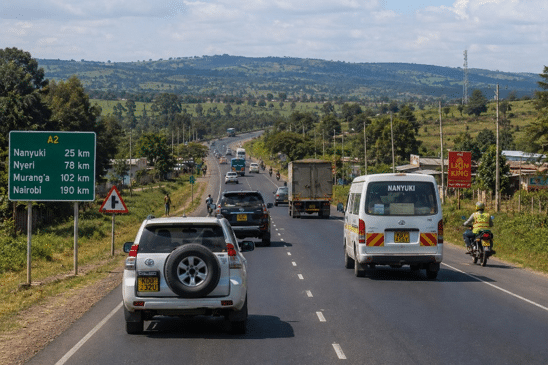

Road safety remains a major transportation and public-safety challenge in Kenya. Every day, motorists travel through congested urban centers, growing towns, high-speed national highways, and rural communities where road conditions can change quickly. Speeding, dangerous overtaking, driver fatigue, poor judgment, inadequate following distance, and other unsafe behaviors continue to contribute to serious road crashes. Kenya’s Ministry of Roads and Transport has specifically identified speeding, dangerous overtaking, drunk driving, overloading, and driver fatigue among common causes of road crashes.
For drivers who want to strengthen their knowledge and develop safer driving habits, OSH Accredited Safety Institute’s Defensive Driving Training DDT-6.0 Kenya provides practical, risk-based defensive driving education designed around the realities of driving in Kenya.
Defensive Driving for Kenyan Roads
Defensive driving goes beyond knowing how to operate a vehicle or obeying traffic signs. It involves continuously identifying hazards, anticipating the actions of other road users, maintaining adequate space, and making decisions early enough to prevent a dangerous situation from developing.
These skills are especially important in Kenya because drivers encounter everything from heavy Nairobi traffic to long-distance rural highways. Kenya’s national road network includes major routes such as the A2 from Nairobi toward Moyale, A109 toward Mombasa, A104 from Malaba to Namanga, A3 from Thika toward Liboi, and A1 from Isebania toward Nadapal.
Drivers using these routes may encounter changing traffic volumes, commercial vehicles, motorcycles, pedestrians, livestock, road construction, changing weather, and varying pavement conditions. Defensive driving training helps motorists recognize that the road ahead should never be assumed to remain clear simply because conditions currently appear safe.
Driving on Rural Highways in Kenya
Rural driving presents hazards that can be very different from those encountered in Nairobi, Mombasa, Kisumu, or other major urban areas.
A motorist traveling along sections of the A2 Nairobi–Moyale corridor, for example, may encounter long stretches of open highway that encourage higher speeds. On the A109 towardMombasa, motorists share the road with buses, trucks, commercial vehicles, and other long-distance traffic. Other rural routes may pass through agricultural and livestock-producing communities.
Open roads should never create a false sense of security.
A defensive driver continuously scans ahead for potholes, damaged pavement, pedestrians, motorcycles, stopped vehicles, cattle, goats, sheep, donkeys, wildlife, and vehicles entering from side roads. Animals can move unpredictably, particularly where roads pass through grazing areas or communities where livestock regularly cross.
When approaching animals, drivers should reduce speed early, increase following distance, avoid aggressive horn use that could cause an animal to move unpredictably, and remain prepared to stop.
Potholes create another significant risk. Swerving suddenly to avoid a pothole can place a vehicle directly into opposing traffic or alongside another vehicle. Defensive drivers scan far enough ahead to identify deteriorated pavement early and reduce speed while maintaining control.
Following Distance: Give Yourself Time to React
One of the most important principles taught through Defensive Driving Training DDT-6.0Kenya is maintaining adequate space between vehicles.
For passenger vehicles under normal conditions, drivers should maintain a minimum three-second following distance. Select a fixed object ahead, such as a road sign or utility pole. When the vehicle ahead passes it, begin counting. Your vehicle should not reach that point for at least three seconds.
Commercial vehicles require considerably more stopping distance because of their size, weight, load, and braking characteristics. The DDT-6.0 Kenya course therefore emphasizes a minimum four-second following distance for commercial vehicles in towns and residential areas and approximately 7–10 seconds on highways.
These distances should be increased further during rain, poor visibility, nighttime driving, deteriorated road conditions, heavy traffic, or whenever additional stopping distance is necessary.
Safe following distance creates something every driver needs during an emergency: time to recognize the hazard, decide what to do, and respond safely.
Safe Lane Changes
Unsafe lane changes can quickly result in sideswipe collisions, loss of control, or conflicts with motorcycles and other vehicles.
Before changing lanes, drivers should check mirrors, signal early, check the blind spot, assess the speed and position of surrounding traffic, and move smoothly into the new lane only when sufficient space is available.
The signal communicates an intention; it does not automatically give a driver the right to enter another lane.
This distinction is particularly important when driving around buses, trucks, motorcycles, and commercial vehicles. Large vehicles have substantial blind spots, while motorcycles can be difficult to detect if drivers rely exclusively on their mirrors.
Poor Overtaking Can Have Deadly Consequences
Poor overtaking is particularly dangerous on two-way rural highways because a mistake can place vehicles on a head-on collision course. Kenya’s Ministry of Roads and Transport has identified dangerous overtaking as one of the unsafe behaviors contributing to road crashes.
A driver should never attempt to overtake simply because the vehicle ahead is moving slowly.
Before overtaking, ask: Can I clearly see far enough ahead? Is overtaking legally permitted here? Is an approaching vehicle visible? Is another vehicle already overtaking me? Do I have enough distance to complete the maneuver without forcing another road user to brake?
Avoid overtaking near curves, hills, junctions, pedestrian crossings, bridges, or anywhere sight distance is inadequate. If conditions are uncertain, the defensive decision is simple: wait.
Arriving a few minutes later is better than attempting an unnecessary high-risk maneuver.
Fatigue Management on Long-Distance Journeys
Driver fatigue deserves particular attention on Kenya’s long-distance routes.
A driver traveling between Nairobi and Mombasa or covering extended sections of the A2 toward northern Kenya can spend many hours behind the wheel. Fatigue reduces concentration, slows reaction time, affects judgment, and can eventually lead to microsleep.
Drivers should begin long journeys properly rested, schedule regular breaks, share driving responsibilities, when possible, remain hydrated, and recognize warning signs such as repeated yawning, difficulty concentrating, heavy eyelids, lane drifting, or difficulty remembering the previous few kilometers.
Opening a window, increasing music volume, or relying heavily on caffeine is not a substitutefor sleep. When significant fatigue develops, the safest response is to stop somewhere safe and rest.
Building a Stronger Defensive Driving Culture in Kenya
Kenya’s National Transport and Safety Authority promotes responsible road use as part of the country’s broader effort to reduce crashes and save lives. Kenya has also implemented a National Road Safety Action Plan 2024–2028, reinforcing the importance of safer road-user behavior and coordinated road-safety strategies.
OSH Accredited Safety Institute’s Defensive Driving Training DDT-6.0 Kenya supports this objective by helping drivers develop the knowledge and risk-awareness necessary to make safer decisions behind the wheel.
Whether navigating Nairobi traffic, traveling the A109 toward Mombasa, driving the A2 toward Moyale, operating a commercial vehicle, or traveling through a rural Kenyan community, defensive driving begins with one principle: identify the risk before it becomes an emergency.
Through better scanning, appropriate following distance, disciplined lane changes, fatigue management, safe overtaking, speed management, and greater awareness of rural hazards, Kenyan drivers can reduce unnecessary risks and help protect themselves, their passengers, and other road users.
Defensive Driving Training DDT-6.0 Kenya is more than an online defensive driving course it is an investment in safer drivers, safer organizations, and safer roads throughout Kenya.
Author: Dr. O’Neil G. Blake, Chief Executive Officer (CEO) of OSHAccredited Safety Institute
Credentials: MS., MBA., MSc., BSc, CSP., ASP., CSHM., CSMP., MRSA.