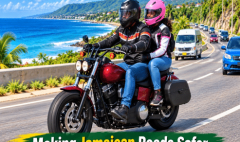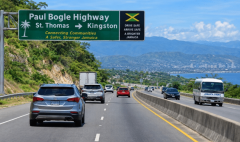

Motorcycle Safety in Jamaica|10 Essential Tips to Prevent Accidents and Save Lives
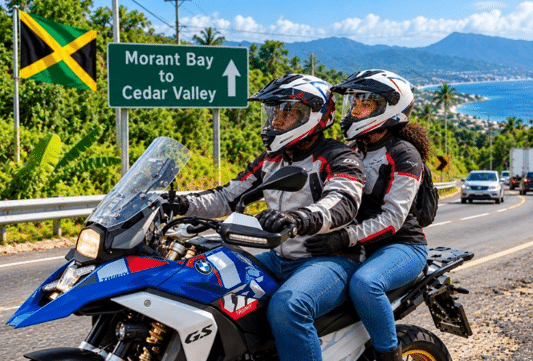

Motorcycle Safety in Jamaica|10 Essential Tips to Prevent Accidents and Save Lives
Introduction.
Motorcycle safety in Jamaica is an increasingly important public safety concern. From Kingston’s busy intersections to the winding highways of St. Thomas, Portland, St. Elizabeth and Westmoreland, motorcyclists encounter hazards that demand concentration, sound judgement and defensive riding skills.Motorcycles provide convenient and economical transportation. However, riders and pillion passengers face greater exposure to serious injuries during collisions because motorcycles lack the protective structure of enclosed vehicles.
Understanding motorcycle hazards and adopting responsible riding practices can significantly reduce crash risks. OSHAccredited Safety Institute has developed “Riding a Motorcycle Safely in Jamaica”, a comprehensive online motorcycle safety course designed to strengthen riders’ knowledge and promote safer Jamaican roads.
Motorcycle Accident Statistics in Jamaica.
According to Jamaica’s Island Traffic Authority (ITA), 374 people died in road collisions during 2025, including 111 motorcyclists, representing approximately 30% of all road fatalities.More recent ITA statistics indicate that, as of October 20, 2026, Jamaica had recorded 273 road fatalities, including 76 motorcyclists, representing approximately 28% of road deaths.These alarming statistics highlight the need for motorcycle safety education, responsible riding practices and effective crash prevention strategies.
- Riding Safely with a Pillion Passenger.
Carrying a pillion passenger increases a motorcycle’s total weight and changes its handling, braking and acceleration characteristics.Before travelling, riders should ensure their motorcycle is designed to carry a passenger and that both individuals wear approved protective helmets and appropriate riding equipment.Passengers should sit securely behind the rider, keep both feet on the passenger footrests and avoid sudden movements.Riders must adjust their speed, following distance and braking techniques to accommodate the additional weight.Clear communication between the rider and passenger is essential, particularly when approaching curves, intersections and uneven road surfaces.
- Avoid Speeding and Excessive Speed.
Speeding remains a leading contributor to fatal road crashes in Jamaica.Excessive speed reduces the time available to recognize hazards, increases stopping distances and significantly increases collision severity.Motorcyclists should obey posted speed limits and reduce speed when approaching schools, residential communities, pedestrian crossings and sharp curves.Remember that safe riding requires adjusting speed to prevailing road, traffic and weather conditions.
- Avoid Poor Overtaking.
Improper overtaking is particularly dangerous on Jamaica’s narrow rural roads and highways with restricted visibility.Motorcyclists should never overtake near blind curves, hill crests, pedestrian crossings or intersections where the maneuver is unsafe or prohibited.Before overtaking, riders must assess oncoming traffic, check mirrors and blind spots, signal appropriately and ensure sufficient space to complete the maneuver safely.Avoid dangerous weaving between vehicles or attempting to overtake several vehicles without adequate visibility.
- Manage Fatigue Before It Becomes Dangerous.
Fatigue reduces concentration, slows reaction time and impairs decision-making.Motorcyclists travelling long distances between Kingston, Montego Bay, Port Antonio and other destinations should plan adequate rest periods.A useful preventive practice is taking a 15–20-minute break after approximately two hours of riding, or sooner whenever fatigue develops.Riders experiencing frequent yawning, reduced concentration or difficulty maintaining road position should stop safely and rest.Never continue riding when excessively tired.
- Maintain a Three-Second Following Distance.
Maintaining adequate separation provides motorcyclists with valuable time to recognize hazards and respond to unexpected situations.Under favorable conditions, riders should maintain at least a three-second following distance behind the vehicle ahead.To measure the gap, select a fixed roadside object and count three seconds after the preceding vehicle passes it.If the motorcycle reaches the object before the count finishes, increase the following distance.Allow additional time during rainfall, reduced visibility, heavy traffic or when carrying a pillion passenger.
- Look 12–15 Seconds Ahead.
Effective defensive riding requires motorcyclists to identify potential hazards before reaching them.Riders should continuously scan approximately 12–15 seconds ahead, whenever road visibility permits.This technique helps identify pedestrians, turning vehicles, potholes, intersections and unexpected obstacles.For example, a rider approaching an intersection in Morant Bay may observe a vehicle preparing to turn across the motorcycle’s path.Early recognition provides additional time to adjust speed, select a safer road position and prepare to stop.
- Recognize Potholes and Dangerous Road Surfaces.
Potholes present serious hazards on Jamaican roads, especially following heavy rainfall.Deep potholes, loose gravel, uneven pavement and standing water can cause motorcyclists to lose traction or control.Riders should scan the roadway continuously, reduce speed when approaching damaged surfaces and avoid sudden steering or braking movements.Never swerve into oncoming traffic to avoid a pothole.When safe, select a clear riding path and maintain smooth motorcycle control.
- Approach Intersections Defensively.
Intersections create numerous conflict points between motorcycles, cars, commercial vehicles and pedestrians.Motorcyclists should approach intersections cautiously, scan in all directions and anticipate drivers who may fail to notice them.When traffic signals change to green, riders should check that conflicting traffic has stopped before proceeding.Waiting approximately two seconds, when safe and appropriate, can provide additional time to identify vehicles entering against the signal.Always obey traffic controls and applicable right-of-way requirements.
- Watch for Stray Animals on Rural Roads.
Stray animals create unpredictable hazards throughout Jamaica’s rural communities.Motorcyclists may encounter goats, cows, horses, dogs and donkeys wandering onto roadways.For example, riders travelling through St. Elizabeth or St. Thomas may encounter goats near road shoulders or larger animals crossing narrow country roads.Animals can change direction suddenly, making aggressive swerving extremely dangerous.Reduce speed, maintain adequate stopping distance and prepare to stop safely whenever animals are observed.
- Invest in Professional Motorcycle Safety Education.
Motorcycle safety involves more than operating the throttle, brakes and steering controls.Responsible riders must understand hazard recognition, defensive riding, protective equipment, motorcycle inspection, passenger safety and emergency preparedness. OSHAccredited Safety Institute’s “Riding a Motorcycle Safely in Jamaica” is a six-hour, self-paced online training course developed to address these essential safety topics.The program contains nine comprehensive modules covering motorcycle safety principles, road hazards, high-risk behaviors, motorcycle control and emergency response.Through structured lessons, practical Jamaican scenarios, illustrations and knowledge assessments, participants can strengthen their understanding of safe motorcycle riding.The course complements practical motorcycle training and encourages responsible decisions that can protect riders, passengers and other road users.
Conclusion: Making Jamaican Roads Safer.
Reducing motorcycle accidents in Jamaica requires education, responsible riding, improved road conditions and consistent compliance with traffic laws.Every rider has a responsibility to avoid speeding, maintain adequate following distances, recognize hazards, protect pillion passengers and make safe decisions.By investing in motorcycle safety education, riders can develop the knowledge necessary to reduce preventable crashes and protect lives.
Enroll in “Riding a Motorcycle Safely in Jamaica” today and become part of the movement towards safer Jamaican roads.https://oshaccredited.com/courses/
OSHAccredited Safety Institute, Making Jamaican Roads Safer.
Website:https://oshaccredited.com
Author: Dr. O’Neil G. Blake, Chief Executive Officer (CEO) of OSHAccredited Safety Institute
Credentials: MS., MBA., MSc., BSc, CSP., ASP., CSHM., CSMP., MRSA.