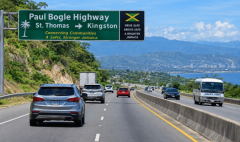

Road Safety and Road Fatalities in Jamaica: Why Defensive Driving Training DDT-6.0 Jamaica Matters.
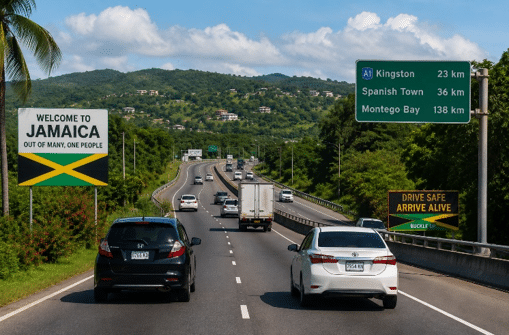

Road Safety and Road Fatalities in Jamaica: Why Defensive Driving Training DDT-6.0 Jamaica Matters.
Road safety in Jamaica remains an important national issue. Every road fatality represents more than a statistic, it represents a life lost, a family affected and a community changed. Although Jamaica has made progress in reducing traffic deaths during parts of 2026, dangerous driving behaviors, vulnerable road users, speeding, unsafe overtaking, fatigue and poor decision-making continue to demonstrate the need for stronger road safety education.
According to Jamaica’s Island Traffic Authority, 374 people had lost their lives in 325 traffic collisions as of December 30, 2025. Vulnerable road users, including pedestrians, pedal cyclists, motorcyclists and pillion passengers, accounted for 59 percent of fatalities. Encouragingly, the first quarter of 2026 recorded 62 fatalities compared with 94 during the same period in 2025, a 33 percent reduction. Nevertheless, every preventable death reinforces the importance of sustained road safety efforts.
The OSH Accredited Safety Institute Defensive Driving Training DDT-6.0 Jamaica course is designed to strengthen defensive driving knowledge and encourage drivers to recognize hazards before those hazards develop into crashes. By emphasizing anticipation, space management, sound judgment and responsible decision-making, DDT-6.0 Jamaica can make an important contribution to road safety education across the country.
Driving on Jamaica’s Rural Highways
Driving conditions in Jamaica can change considerably between urban centers and rural communities. Drivers travelling outside Kingston, Montego Bay and other developed areas may encounter narrow roads, sharp curves, steep gradients, limited shoulders, potholes, pedestrians, motorcycles and animals.
Important routes such as the A1 between Kingston and western Jamaica, A2 along sections of Jamaica’s southern and western corridor, and A3 serving parts of the north and east require drivers to remain alert to changing traffic and road conditions.
Rural roads may also present hazards involving cattle, goats, dogs and other animals entering the roadway. An animal can move unpredictably, and swerving suddenly to avoid it may cause a driver to lose control or enter the path of an approaching vehicle. Animal-related roadway hazards remain relevant to Jamaican road safety; an animal in the carriageway was among the possible causes identified in a fatal 2026 crash reported in Westmoreland.
Potholes create another challenge. A defensive driver should scan well ahead, reduce speed before reaching a damaged section of roadway and avoid abrupt steering whenever possible. The objective is not simply to react to the pothole immediately in front of the vehicle but to identify hazards early enough to maintain control.
Following Distance: Creating Time to Respond
Adequate following distance is one of the most important principles taught in Defensive Driving Training DDT-6.0 Jamaica. Following too closely reduces the time available to recognize a hazard-make a decision-and-stop safely.
DDT-6.0 Jamaica teaches a practical space-management approach:
- Passenger vehicles: Maintain at least a three-second following distance under normal conditions.
- Commercial vehicles in towns and residential areas: Maintain at least a four-second following distance.
- Commercial vehicles travelling on highways: Maintain approximately seven to ten seconds, recognizing the greater stopping distance and operating characteristics of larger vehicles.
These are minimum defensive-driving guidelines rather than guarantees of stopping distance. Drivers should increase the gap during rain, poor visibility, darkness, heavy traffic, when roads are damaged or whenever conditions increase risk.
Safer Lane Changes
Lane changes should never become automatic movements. Before changing lanes, drivers should evaluate the traffic environment, check mirrors, activate the turn signal early, check the blind spot and confirm that adequate space exists.
A defensive driver also considers what other road users might do. A motorcycle may be approaching quickly through a blind spot, another vehicle may simultaneously attempt to enter the same lane, or the vehicle ahead may suddenly brake.
The principle is simple: scan, signal, check, confirm and move only when safe.
Jamaica’s Road Traffic Regulations reinforce this responsibility by requiring drivers performing maneuvers—including movements to the right or left—to ensure they can do so without endangering other road users.
Poor Overtaking Can Have Deadly Consequences
Poor overtaking is particularly dangerous on two-way rural roads. Attempting to pass near curves, hill crests or locations with inadequate visibility can place vehicles directly into opposing traffic.
Jamaica’s Road Traffic Regulations specifically prohibit overtaking on a two-way road when approaching the crest of a hill or a bend where visibility is inadequate, as well as where traffic signs prohibit overtaking. Drivers must also ensure that an overtaking maneuver can be completed without endangering oncoming traffic.
DDT-6.0 Jamaica emphasizes that drivers should never overtake simply because they are impatient with a slower vehicle. Before overtaking, ask: Is it legal? Can I see far enough ahead? Is there sufficient space? Can I complete the maneuver safely?
If there is uncertainty, the defensive decision is to wait.
Fatigue Management and Defensive Driving
Fatigue can reduce concentration, slow reaction time and impair judgment. This is particularly important for commercial drivers and motorists undertaking long journeys across Jamaica.
Drivers should begin journeys adequately rested, schedule appropriate breaks and recognize warning signs such as repeated yawning, difficulty concentrating, heavy eyelids, wandering thoughts or difficulty maintaining consistent lane position.
Opening a window, turning up music or relying on caffeine should not be treated as substitutes for adequate rest. When fatigue begins affecting safe vehicle operation, the appropriate response is to stop somewhere safe and rest.
Improving Road Safety Education in Jamaica
In July 2026, the Chairman of Jamaica’s National Road Safety Council described road fatalities as the country’s second-leading cause of violent deaths, particularly among people aged 18 to 49, and called for a coordinated national response.
Education should be an important part of that response.
OSH Accredited Safety Institute Defensive Driving Training DDT-6.0 Jamaica can help strengthen road safety education by moving beyond simply teaching traffic rules. Effective defensive driving education teaches drivers to anticipate mistakes, recognize developing hazards, maintain safe space, control speed, manage fatigue and make decisions that reduce exposure to crashes.
For companies operating trucks, buses, service vehicles and other fleets, structured defensive driving training can also reinforce organizational expectations for safe vehicle operation. For individual motorists, it can strengthen the everyday habits necessary to manage Jamaica’s diverse driving environments.
Building a Safer Driving Culture in Jamaica
Reducing road fatalities requires enforcement, safer roads, responsible vehicles, public awareness and critically better driver behavior. Defensive driving provides motorists with practical tools they can apply every time they enter a vehicle.
The goal of Defensive Driving Training DDT-6.0 Jamaica is therefore bigger than passing an online course. It is about developing drivers who scan farther ahead, maintain adequate following distance, manage blind spots, make disciplined lane changes, avoid dangerous overtaking, recognize fatigue and continually adjust their driving to changing road conditions.
Jamaica has already demonstrated that reductions in road fatalities are possible. Continuing that progress requires sustained commitment.
Through accessible online safety training, practical safety courses and focused safety training, OSH Accredited Safety Institute’s Defensive Driving Training DDT-6.0 Jamaica can contribute to stronger road safety education and a more defensive driving culture—helping Jamaican drivers make safer decisions, prevent collisions and, ultimately, save lives.
Author: Dr. O’Neil G. Blake, Chief Executive Officer (CEO) of OSHAccredited Safety Institute
Credentials: MS., MBA., MSc., BSc, CSP., ASP., CSHM., CSMP., MRSA.