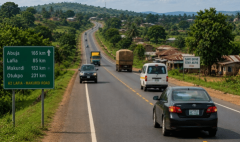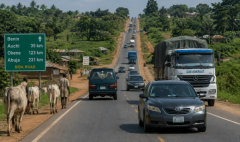

Road Safety Education in Ghana: Improving Driver Safety with Defensive Driving Training DDT-6.0 Ghana.
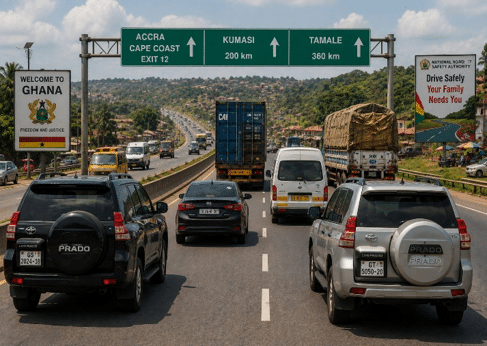

Road Safety Education in Ghana: Improving Driver Safety with Defensive Driving Training DDT-6.0 Ghana.
Road transportation is central to Ghana’s economy and daily life. Every day, private cars, taxis, tro-tros, buses, motorcycles, delivery vehicles, and heavy commercial trucks share roads connecting Accra, Kumasi, Tema, Takoradi, Tamale, Cape Coast, and hundreds of smaller communities. With such diverse traffic and road conditions, strengthening road safetyeducation in Ghana is essential for reducing crashes, injuries, and road fatalities.
The OSH Accredited Safety Institute Defensive Driving Training DDT-6.0 Ghana course is designed to support this goal by providing practical, risk-based defensive driving education relevant to Ghanaian drivers, companies, fleet operators, and professional drivers. Rather than teaching drivers simply how to operate a vehicle, DDT-6.0 Ghana emphasizes how to recognize hazards, anticipate problems, manage risk, and make safer decisions before dangerous situations develop.
What Is Road Safety?
Road safety refers to the systems, behaviors, engineering measures, laws, education, and practices intended to prevent road traffic crashes and reduce the severity of injuries when crashes occur. It involves drivers, passengers, pedestrians, cyclists, motorcyclists, commercial vehicle operators, government agencies, employers, and communities.
For an individual driver, road safety begins with attitude and awareness. A defensive driver continually observes the traffic environment, identifies hazards, maintains adequate space, controls speed, anticipates the mistakes of other road users, and takes early action to avoid conflicts.
This proactive approach is at the heart of effective defensive driving training in Ghana.
Road Safety in Ghana
Ghana continues to face significant road safety challenges. Rapid urbanization, increased vehicle ownership, pedestrian activity, motorcycles, commercial transportation, speeding, poor overtaking decisions, distracted driving, fatigue, and varying road conditions all contribute to the complexity of the country’s traffic environment.
The National Road Safety Authority has identified speeding as a major road safety concern. Ghana’s National Road Safety Strategy III notes that speed contributes significantly to road traffic crashes and fatalities and emphasizes speed management as an important national intervention.
This reinforces an important principle: road safety cannot depend solely on enforcement. Driver education, defensive driving training, personal responsibility, and organizational fleet–safety programs must also play an important role.
Driving on Ghana’s Rural Highways
Driving outside Ghana’s major cities presents different hazards from driving in Accra or Kumasi. Important routes include the N1 Accra–Cape Coast–Takoradi corridor, N2 Tema–Ho corridor, N4 Accra–Koforidua route, N6 Accra–Kumasi highway, and N10 through northern Ghana toward Bolgatanga and Paga.
These highways connect communities and support commerce, agriculture, tourism, and freight movement. However, drivers must be prepared for rapidly changing conditions.
On rural sections of Ghanaian highways, motorists may encounter potholes, damaged road surfaces, roadside pedestrians, motorcycles, bicycles, slow-moving trucks, stopped vehicles, poorly illuminated areas, roadside markets, and vehicles entering unexpectedly from smaller roads.
Cattle, goats, sheep, dogs, and other stray animals may also enter the roadway. Drivers should reduce speed when animals are visible, increase following distance, scan the roadside carefully, and avoid sudden steering movements that could cause loss of control.
Speeding and the Defensive Driver
Speeding reduces the time available to recognize and respond to hazards. It also increases stopping distance and can dramatically increase the severity of a collision.
A speed that may appear reasonable on an open highway can quickly become unsafe when approaching a village, curve, intersection, pedestrian area, pothole, slow-moving truck, or animal.
Defensive drivers therefore adjust speed not only to the posted limit but also to traffic, visibility, road surface, weather, vehicle condition, and surrounding hazards. The objective is to maintain enough time and space to respond safely when conditions suddenly change.
Poor Overtaking Can Have Severe Consequences
Poor overtaking is particularly dangerous on Ghana’s two-way rural highways. A driver may underestimate the speed of an approaching vehicle, misjudge the distance required to pass a truck or bus, or attempt to overtake several vehicles at once.
Drivers should never overtake simply because they are frustrated with a slower vehicle.
Before overtaking, assess the road ahead, approaching traffic, road markings, intersections, curves, hills, pedestrian activity, available acceleration distance, and whether sufficient space exists to return safely to the correct lane.
If there is uncertainty, do not overtake. Waiting for a safer opportunity is always preferable to turning an unnecessary passing maneuver into a potentially fatal head-on collision.
Safer Lane Changes
Lane changing is another routine maneuver that can become dangerous when performed without adequate observation.
Before changing lanes, drivers should check their mirrors, signal early, evaluate surrounding traffic, check the blind spot, establish sufficient space, and then make one smooth and deliberate movement into the new lane.
Drivers should avoid abrupt lane changes and repeatedly weaving between vehicles. In congested areas of Accra, Tema, Kumasi, and Takoradi, maintaining lane discipline and anticipating the movements of taxis, tro-tros, motorcycles, buses, and other vehicles is especially important.
Following Distance: Create a Safety Cushion
Adequate following distance gives a driver additional time to observe a developing hazard, decide what action is necessary, and safely slow or stop.
As a practical defensive-driving standard, DDT-6.0 Ghana teaches a minimum three-second following distance for passenger cars under normal conditions.
For commercial vehicles, additional space is necessary because heavier vehicles generally require greater stopping distances. DDT-6.0 Ghana therefore teaches approximately four seconds for commercial vehicles in towns and residential areas and 7–10 seconds for commercial vehicles traveling on highways.
These distances should be increased when driving in rain, darkness, poor visibility, heavy traffic, deterioration of road conditions, or other adverse circumstances.
The principle is simple: space creates time, and time creates options.
Fatigue Management and Long-Distance Driving
Fatigue is particularly important for drivers traveling long distances between Ghana’s major cities and regions. A driver traveling from Accra toward Kumasi, Tamale, Bolgatanga, Takoradi, or another distant destination may spend many hours behind the wheel.
Fatigue can reduce concentration, slow reaction time, impair judgment, and contribute to lane drifting and microsleep.
Drivers should begin long journeys adequately rested, plan realistic travel schedules, take appropriate rest breaks, share driving responsibilities when possible, and recognize warning signs such as repeated yawning, heavy eyelids, difficulty concentrating, or inability to remember the previous few kilometers.
When a driver becomes dangerously tired, the appropriate defensive response is to stop in a safelocation and rest.
How DDT-6.0 Ghana Can Strengthen Driver Education
The OSH Accredited Safety Institute Defensive Driving Training DDT-6.0 Ghana course can make an important contribution to road safety education by focusing on practical risk recognition and decision-making skills that drivers can apply on Ghanaian roads.
The course addresses important defensive driving principles including speed management, safefollowing distance, scanning, lane-change discipline, blind-spot awareness, safer overtaking, rural-road hazards, fatigue management, vehicle inspection, hazard recognition, and collision-prevention strategies.
Its online format also provides organizations with an accessible method of delivering consistent online safety training to employees and professional drivers. Transportation companies, construction organizations, mining operations, utilities, logistics businesses, government agencies, delivery companies, and other fleet operators can incorporate DDT-6.0 Ghana into broader driver-safety and safety training programs.
Building a Stronger Road Safety Culture in Ghana
Improving road safety in Ghana requires enforcement, safer infrastructure, responsible road use, vehicle maintenance, effective policies, and high-quality driver education. Defensive driving training provides another important layer of protection by helping drivers recognize that they have considerable influence over the risks they face.
Defensive Driving Training DDT-6.0 Ghana promotes a proactive approach: scan farther ahead, maintain adequate space, control speed, anticipate hazards, avoid dangerous overtaking, change lanes carefully, manage fatigue, and always leave yourself an escape option.
When these principles become everyday driving habits, road safety education in Ghana becomes more than theoretical knowledge. It becomes practical behavior capable of preventing crashes, protecting road users, and helping build a stronger road safety culture throughout Ghana.
Author: Dr. O’Neil G. Blake, Chief Executive Officer (CEO) of OSHAccredited Safety Institute
Credentials: MS., MBA., MSc., BSc, CSP., ASP., CSHM., CSMP., MRSA.